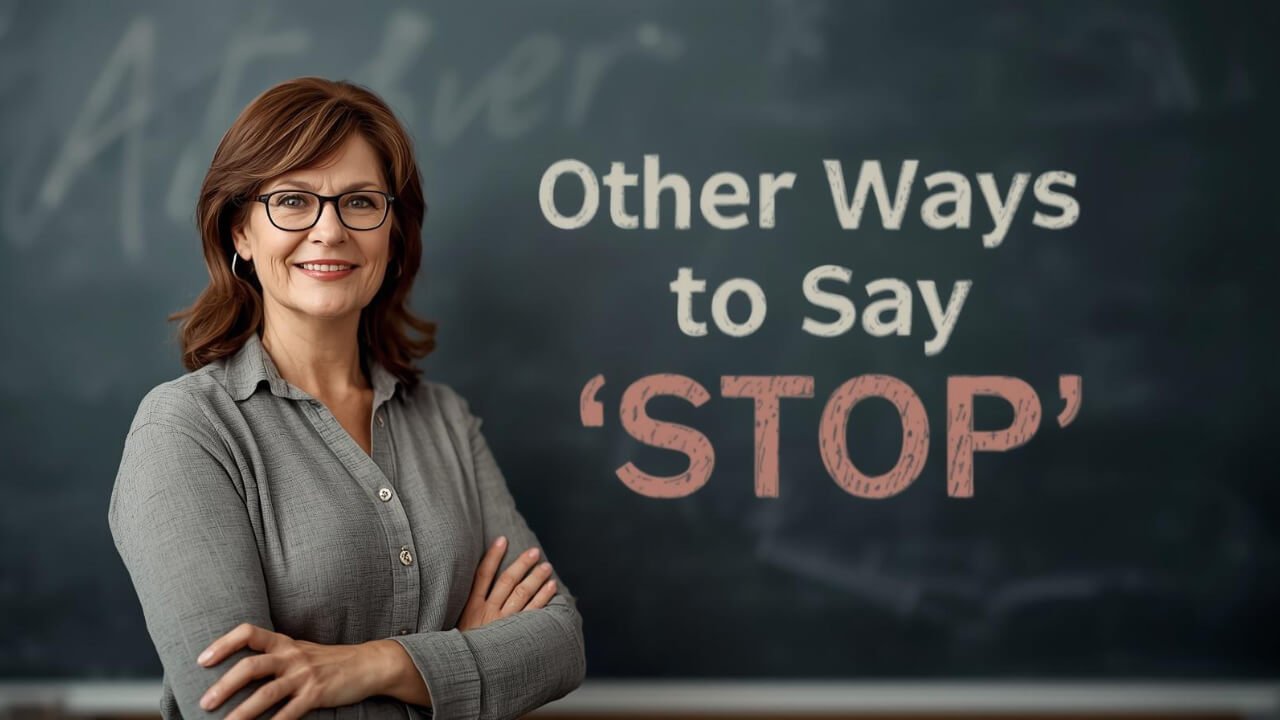

When searching for other ways to say stop, it is useful to understand how this short word works in daily speech, formal communication, instructions, warnings, and professional writing. People use “stop” when they want an action to end, a process to pause, a behavior to change, or a situation to be controlled. However, using the same word repeatedly can make your language sound sharp, plain, or limited.
Effective word choice can improve tone, clarity, sentence variety, and communication style. Some alternatives sound polite, while others sound firm, official, gentle, urgent, or instructional. Choosing the right expression depends on the context, relationship, purpose, and level of seriousness behind the message.
What Does “Stop” Mean?
The word “stop” means to end an action, prevent movement, pause progress, or bring something to a close. It can refer to physical movement, speech, behavior, work, habits, processes, or ongoing activities. In communication, it is often used when someone needs to set a boundary, give direction, prevent a mistake, or create a clear change in action.
Common Situations Where “Stop” Is Used
The word is used in many personal, professional, and practical situations where an action needs to end, slow down, or be controlled.
- When asking someone to end an action.
- When giving safety instructions or warnings.
- When pausing a task, plan, or process.
- When setting personal or professional boundaries.
- When explaining that something should no longer continue.
Is It Professional/Polite to Say “Stop”?
Yes, “stop” can be professional and polite when used carefully, but it may sound too direct in sensitive situations. In formal or respectful communication, alternatives like “please discontinue”, “pause the process”, “cease the activity”, or “hold off for now” can sound more appropriate. The best choice depends on whether the message needs to be firm, gentle, urgent, or diplomatic.
Pros and Cons
Pros
- It is clear, direct, and easy to understand
- It works well in urgent or safety related situations
- It quickly communicates that an action should end
Cons
- It can sound harsh if the tone is not softened
- It may feel too simple for formal writing
- It does not always explain why the action should end
“Stop” Synonyms:

Explore these meaningful alternatives to “stop”:
• Cease
• Halt
• Pause
• Discontinue
• End
• Quit
• Cancel
• Suspend
• Terminate
• Hold Off
• Bring to a Close
• Put an End To
• Cut Off
• Break Off
• Shut Down
• Hold Back
• Restrain
• Prevent
• Block
• Forbid
• Avoid
• Refrain From
• Give Up
• Leave Off
• Knock It Off
• Call It Off
• Put a Pause On
• Bring to a Standstill
• Draw to a Close
• Come to a Halt
• Lay Off
• Hold Your Horses
• Step Back
• Back Away
• Let It Rest
Cease
Meaning:
To stop an action, activity, or process completely.
Explanation:
This formal word is often used when something needs to end in an official, serious, or controlled way.
Example:
“Please cease all unnecessary activity until the issue is reviewed.”
Best Use:
Formal notices, instructions, policies, and serious communication.
Worst Use:
Very casual conversations with friends.
Tone:
Formal, firm
Halt
Meaning:
To bring movement, progress, or action to a stop.
Explanation:
This word is strong and clear, especially when describing sudden interruption or immediate control.
Example:
“The manager asked the team to halt the process until further notice.”
Best Use:
Safety instructions, urgent updates, and operational communication.
Worst Use:
Soft emotional conversations.
Tone:
Direct, serious
Pause
Meaning:
To stop something for a short time before continuing later.
Explanation:
This gentle alternative works well when the action is not ending permanently.
Example:
“Let us pause the discussion and return to it after lunch.”
Best Use:
Meetings, conversations, lessons, and temporary breaks.
Worst Use:
Situations requiring a permanent end.
Tone:
Calm, polite
Discontinue
Meaning:
To stop doing, using, offering, or producing something.
Explanation:
This professional phrase is useful when an activity, service, habit, or product is being ended.
Example:
“The company decided to discontinue the old procedure.”
Best Use:
Formal writing, business updates, and official explanations.
Worst Use:
Quick casual speech.
Tone:
Professional, clear
End
Meaning:
To bring something to its final point.
Explanation:
This simple word works well when describing the close of an action, event, relationship, or process.
Example:
“We need to end the meeting before the next session begins.”
Best Use:
General writing, conversations, and clear instructions.
Worst Use:
When a softer or more formal phrase is needed.
Tone:
Neutral, direct
Quit
Meaning:
To stop doing something, especially a habit, job, or repeated action.
Explanation:
This common word often suggests a personal decision to leave, abandon, or stop an activity.
Example:
“He decided to quit complaining and focus on solutions.”
Best Use:
Habits, jobs, activities, and personal choices.
Worst Use:
Formal official documents.
Tone:
Casual, straightforward
Cancel
Meaning:
To stop a plan, event, order, or arrangement from happening.
Explanation:
This word is useful when something scheduled or expected will no longer take place.
Example:
“They had to cancel the appointment because of the emergency.”
Best Use:
Plans, bookings, events, meetings, and arrangements.
Worst Use:
Describing emotional behavior or habits.
Tone:
Practical, clear
Suspend
Meaning:
To stop something temporarily, usually until a decision or review is made.
Explanation:
This formal word is often used when an action is paused due to rules, concerns, or investigation.
Example:
“The school decided to suspend the activity until safety checks were complete.”
Best Use:
Policies, official decisions, and temporary restrictions.
Worst Use:
Light friendly conversation.
Tone:
Formal, official
Terminate
Meaning:
To bring something to a definite and final end.
Explanation:
This strong formal word is used when ending agreements, employment, services, or processes.
Example:
“The agreement may terminate if the conditions are not met.”
Best Use:
Contracts, legal writing, formal notices, and business communication.
Worst Use:
Gentle personal messages.
Tone:
Official, final
Hold Off
Meaning:
To delay or stop an action for the moment.
Explanation:
This phrase is useful when you want someone to wait before continuing.
Example:
“Please hold off on sending the final report until I review it.”
Best Use:
Workplace messages, planning, and polite instructions.
Worst Use:
Permanent cancellations.
Tone:
Polite, practical
Read Also:
Other Ways to Say “I Have”
Bring to a Close
Meaning:
To end something in an organized or respectful way.
Explanation:
This phrase sounds polished and is often used when closing a meeting, event, speech, or discussion.
Example:
“We will bring the session to a close after the final question.”
Best Use:
Meetings, speeches, events, and formal discussions.
Worst Use:
Emergency warnings.
Tone:
Formal, graceful
Put an End To
Meaning:
To stop something completely, especially something unwanted.
Explanation:
This phrase sounds strong and is useful when ending a problem, habit, conflict, or repeated issue.
Example:
“The new rule was introduced to put an end to confusion.”
Best Use:
Problem solving, rules, and strong statements.
Worst Use:
Soft requests or gentle reminders.
Tone:
Firm, decisive
Cut Off
Meaning:
To stop supply, communication, movement, or access suddenly.
Explanation:
This phrase often suggests interruption or separation from something.
Example:
“The heavy rain cut off access to the road.”
Best Use:
Communication, access, movement, and supply related situations.
Worst Use:
Polite professional requests.
Tone:
Direct, abrupt
Break Off
Meaning:
To stop something suddenly, especially a conversation, relationship, or negotiation.
Explanation:
This phrase is used when something ends before it is naturally completed.
Example:
“They decided to break off the discussion after no agreement was reached.”
Best Use:
Talks, negotiations, relationships, and unfinished actions.
Worst Use:
Simple task instructions.
Tone:
Serious, abrupt
Shut Down
Meaning:
To stop a system, operation, business, or discussion.
Explanation:
This phrase can describe both physical closure and the ending of communication or activity.
Example:
“The team had to shut down the machine for maintenance.”
Best Use:
Systems, operations, machines, businesses, and discussions.
Worst Use:
Gentle emotional support messages.
Tone:
Strong, practical
Hold Back
Meaning:
To stop or control someone or something from moving forward.
Explanation:
This phrase is useful when describing restraint, delay, control, or emotional self management.
Example:
“She tried to hold back her anger during the argument.”
Best Use:
Emotions, movement, progress, and personal control.
Worst Use:
Formal cancellation notices.
Tone:
Controlled, descriptive
Restrain
Meaning:
To stop someone or something from acting freely.
Explanation:
This formal word suggests control, discipline, or prevention of unwanted action.
Example:
“The officer tried to restrain the crowd from entering the area.”
Best Use:
Serious situations, behavior control, and formal writing.
Worst Use:
Friendly everyday requests.
Tone:
Formal, serious
Prevent
Meaning:
To stop something from happening before it occurs.
Explanation:
This word is useful when the goal is to avoid a problem, risk, mistake, or unwanted result.
Example:
“Clear instructions can prevent many common errors.”
Best Use:
Safety, planning, problem solving, and professional writing.
Worst Use:
When an action has already happened.
Tone:
Practical, protective
Block
Meaning:
To stop movement, access, progress, or communication.
Explanation:
This word shows that something is being stopped by a barrier, decision, rule, or obstacle.
Example:
“The fallen tree blocked the road for several hours.”
Best Use:
Access, movement, communication, and obstacle related situations.
Worst Use:
Gentle polite requests.
Tone:
Clear, firm
Forbid
Meaning:
To officially or strongly say that something is not allowed.
Explanation:
This word is strict and is used when rules, authority, or serious boundaries are involved.
Example:
“The policy forbids the use of unsafe equipment.”
Best Use:
Rules, laws, policies, and firm instructions.
Worst Use:
Casual suggestions or friendly advice.
Tone:
Strict, authoritative
Avoid
Meaning:
To keep away from something or choose not to do it.
Explanation:
This softer alternative works well when advising someone not to continue or start an action.
Example:
“You should avoid making quick decisions without enough information.”
Best Use:
Advice, guidance, health, safety, and writing instructions.
Worst Use:
Immediate emergency commands.
Tone:
Helpful, cautious
Refrain From
Meaning:
To politely stop yourself from doing something.
Explanation:
This formal phrase is often used in respectful instructions, notices, and guidelines.
Example:
“Please refrain from using phones during the presentation.”
Best Use:
Formal requests, rules, public notices, and professional settings.
Worst Use:
Casual conversations with close friends.
Tone:
Polite, formal
Give Up
Meaning:
To stop trying, doing, or using something.
Explanation:
This phrase can describe quitting a habit, leaving a goal, or surrendering an effort.
Example:
“She refused to give up even when the task became difficult.”
Best Use:
Habits, goals, challenges, and personal decisions.
Worst Use:
Official instructions or formal restrictions.
Tone:
Emotional, conversational
Leave Off
Meaning:
To stop doing something, often with the possibility of continuing later.
Explanation:
This phrase is useful when work, reading, or discussion stops at a certain point.
Example:
“We can leave off here and continue the lesson tomorrow.”
Best Use:
Learning, reading, work sessions, and discussions.
Worst Use:
Urgent warnings.
Tone:
Gentle, conversational
Knock It Off
Meaning:
To stop annoying, rude, or unwanted behavior immediately.
Explanation:
This informal phrase is firm and often used when someone is irritated.
Example:
“Knock it off and listen to the instructions.”
Best Use:
Casual speech and direct behavior correction.
Worst Use:
Professional emails or polite formal messages.
Tone:
Informal, sharp
Call It Off
Meaning:
To cancel or stop a planned event, action, or arrangement.
Explanation:
This phrase is used when a decision is made not to continue with something planned.
Example:
“They decided to call off the trip because of bad weather.”
Best Use:
Events, plans, meetings, and arrangements.
Worst Use:
General behavior correction.
Tone:
Conversational, final
Put a Pause On
Meaning:
To temporarily stop an activity, plan, or decision.
Explanation:
This phrase sounds modern and polite when something needs to wait.
Example:
“We should put a pause on the campaign until the details are ready.”
Best Use:
Projects, planning, decisions, and professional discussions.
Worst Use:
Permanent endings.
Tone:
Polite, strategic
Bring to a Standstill
Meaning:
To stop movement, progress, or activity completely.
Explanation:
This phrase is useful when something becomes unable to continue.
Example:
“The sudden power failure brought the work to a standstill.”
Best Use:
Reports, descriptions, traffic, operations, and progress delays.
Worst Use:
Short casual requests.
Tone:
Descriptive, serious
Draw to a Close
Meaning:
To gradually come to an end.
Explanation:
This phrase sounds smooth and polished when describing the natural ending of an event or period.
Example:
“As the ceremony drew to a close, everyone stood for the final remarks.”
Best Use:
Events, speeches, stories, and formal writing.
Worst Use:
Immediate instructions.
Tone:
Elegant, formal
Come to a Halt
Meaning:
To stop moving or progressing.
Explanation:
This phrase often describes a process, vehicle, activity, or plan that stops suddenly or clearly.
Example:
“The project came to a halt after funding was delayed.”
Best Use:
Progress updates, movement, operations, and reports.
Worst Use:
Personal emotional requests.
Tone:
Neutral, descriptive
Lay Off
Meaning:
To stop bothering, criticizing, or pressuring someone.
Explanation:
This informal phrase is used when asking someone to reduce pressure or unwanted behavior.
Example:
“Lay off the criticism and give him time to improve.”
Best Use:
Casual conversations and behavior related comments.
Worst Use:
Formal workplace notices.
Tone:
Informal, firm
Hold Your Horses
Meaning:
To slow down, wait, or stop rushing.
Explanation:
This casual phrase is used when someone is acting too quickly or impatiently.
Example:
“Hold your horses, we need to check the details first.”
Best Use:
Friendly conversations and light reminders.
Worst Use:
Formal documents or serious warnings.
Tone:
Casual, playful
Step Back
Meaning:
To stop being too involved and take time to think.
Explanation:
This phrase is helpful when someone needs distance, reflection, or a calmer view of the situation.
Example:
“Let us step back and look at the problem more carefully.”
Best Use:
Discussions, conflict resolution, planning, and reflection.
Worst Use:
Direct emergency commands.
Tone:
Calm, thoughtful
Back Away
Meaning:
To move away or stop being involved in something.
Explanation:
This phrase can be physical or emotional, depending on the situation.
Example:
“He chose to back away from the argument before it became worse.”
Best Use:
Conflict, safety, personal boundaries, and involvement.
Worst Use:
Formal project instructions.
Tone:
Cautious, clear
Let It Rest
Meaning:
To stop discussing, pushing, or worrying about something for now.
Explanation:
This gentle phrase is useful when a topic needs quiet, time, or emotional space.
Example:
“We should let it rest and talk again when everyone feels calmer.”
Best Use:
Sensitive conversations, disagreements, and emotional situations.
Worst Use:
Urgent safety instructions.
Tone:
Gentle, peaceful
Conclusion
Using alternatives to “stop” helps your communication sound more precise, polished, and suitable for the moment. A simple command can become softer, firmer, more professional, or more thoughtful depending on the phrase you choose. This makes your message easier to understand and more appropriate for the situation.
Different expressions carry different levels of urgency, authority, politeness, and emotional weight. When you choose carefully, you can set boundaries, give instructions, prevent problems, or end actions without sounding unclear or unnecessarily harsh. Strong vocabulary helps your message feel confident, respectful, and complete.
FAQs
Is “stop” rude to say?
“Stop” is not always rude, but it can sound harsh if the situation needs a softer tone.
What is a polite way to say “stop”?
“Please refrain from” and “please pause” are polite alternatives.
What is a formal alternative to “stop”?
“Cease”, “discontinue”, and “suspend” are formal alternatives.
Can I use “halt” instead of “stop”?
Yes, “halt” works well when you want a strong and serious alternative.
How do I choose the best replacement for “stop”?
Choose based on whether you need to sound polite, urgent, formal, casual, gentle, or firm.