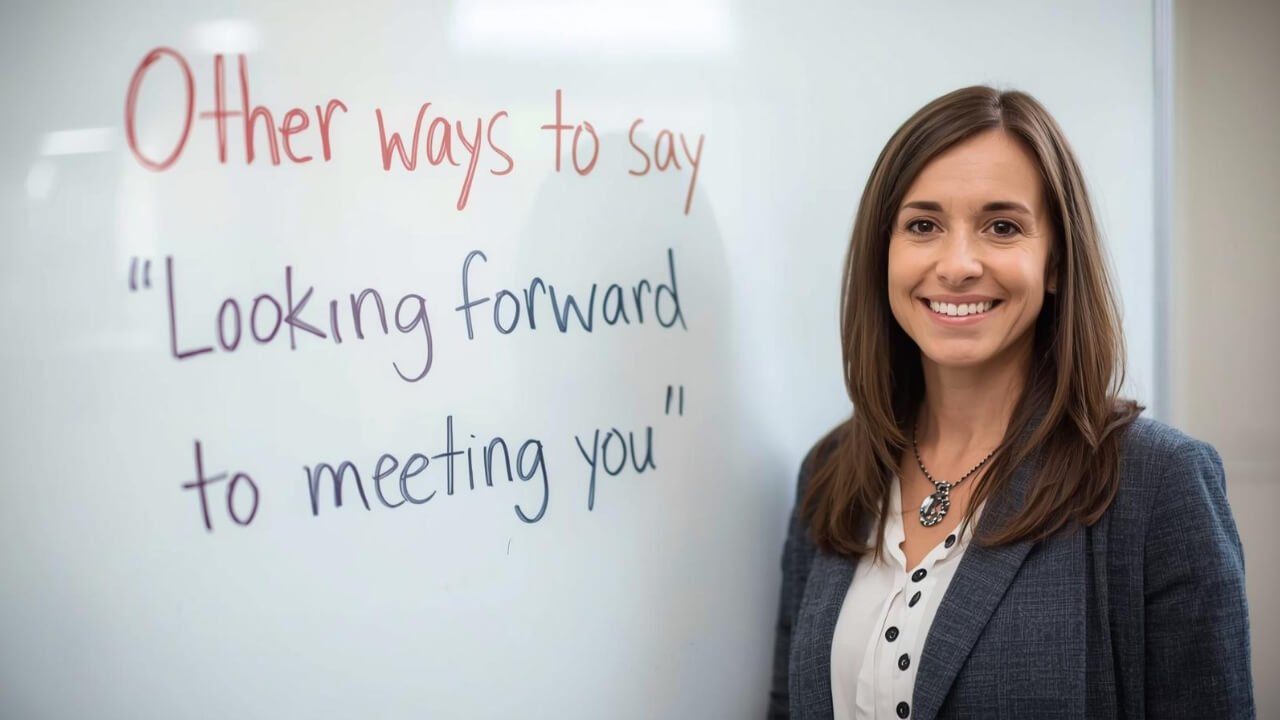

When you want to express excitement and anticipation for an upcoming meeting, the phrase looking forward to meeting you is commonly used. However, relying on this same phrase repeatedly can sound monotonous, especially in professional emails, business communication, or networking scenarios. Exploring other ways to say looking forward to meeting you allows you to sound polite, enthusiastic, and professional while keeping your communication fresh.
Effective communication is not just about sharing information; it’s about building connections and leaving a positive impression. Using varied expressions to say looking forward to meeting you can strengthen relationships with colleagues, clients, or collaborators. Choosing the right words helps convey enthusiasm, respect, and readiness, whether in formal emails, casual invitations, or networking messages.
What Does “Looking Forward to Meeting You” Mean?
The phrase looking forward to meeting you expresses anticipation, excitement, and a positive attitude toward an upcoming interaction. It is a polite and professional way to indicate eagerness to connect, collaborate, or engage with someone. While often used in business emails, it also works in personal invitations and social situations, signaling attentiveness and friendliness.
Common Situations Where “Looking Forward to Meeting You” Is Used
This phrase is versatile and appears in many communication contexts:
- Sending professional emails to clients, colleagues, or partners
- Confirming appointments, interviews, or meetings
- Responding to event invitations or social gatherings
- Networking and connecting with industry professionals
- Concluding emails with positive anticipation
Is It Professional/Polite to Say “Looking Forward to Meeting You”?
Yes, it is generally professional, polite, and well-received. However, in certain contexts, using alternatives like Excited to connect, Eager to meet, or Anticipating our discussion can sound more dynamic, enthusiastic, or tailored to the recipient. Using varied expressions prevents emails or messages from feeling repetitive and keeps your communication engaging.
Pros and Cons
Pros
- Shows enthusiasm and politeness
- Enhances professional image and rapport
- Can build positive anticipation for meetings
Cons
- Repeated usage can feel formulaic
- May lack energy in casual or creative contexts
- Some alternatives may be too informal for formal emails
“Looking Forward to Meeting You” Synonyms:
Explore these meaningful alternatives to looking forward to meeting you:
- Excited to Connect
- Eager to Meet
- Anticipating Our Meeting
- Can’t Wait to Meet
- Looking Ahead to Our Conversation
- Happy to Connect Soon
- Thrilled to Meet You
- Anticipating Our Discussion
- It Will Be Great to Meet
- Looking Forward to Our Interaction
- Excited About Our Upcoming Meeting
- Can’t Wait to Connect
- Looking Forward to Our Conversation
- Looking Forward to Seeing You
- Looking Forward to Catching Up
- Excited for Our Meeting
- Thrilled About Our Upcoming Discussion
- Anticipating Meeting You Soon
- Looking Forward to Collaborating
- It’ll Be a Pleasure to Meet
- Eager for Our Discussion
- Looking Forward to Talking With You
- Excited About Connecting
- Looking Forward to Chatting
- Can’t Wait to Talk
- Anticipating Our Exchange
- Looking Forward to Meeting in Person
- Excited for Our Conversation
- Looking Forward to Our Collaboration
- It’ll Be Wonderful to Meet
- Thrilled to Connect Soon
- Looking Forward to Discussing With You
- Excited About Our Interaction
- Looking Forward to Touching Base
- Can’t Wait to Exchange Ideas
Excited to Connect
Meaning: Shows eagerness to establish communication or meet someone.
Explanation: Polite and enthusiastic way to express anticipation.
Example: “Excited to connect and discuss the upcoming project.”
Best Use: Professional emails, networking
Worst Use: Overly casual text messages in formal contexts
Tone: Polite, enthusiastic, professional
Eager to Meet
Meaning: Conveys strong anticipation for a meeting.
Explanation: A concise, professional alternative to the standard phrase.
Example: “I’m eager to meet and learn more about your work.”
Best Use: Professional emails, introductions
Worst Use: Informal chat among friends
Tone: Professional, warm
Anticipating Our Meeting
Meaning: Expresses expectation and preparedness for an upcoming interaction.
Explanation: Slightly formal, suitable for business communication or email sign-offs.
Example: “Anticipating our meeting next week to discuss collaboration.”
Best Use: Emails, formal appointments
Worst Use: Casual social invitations
Tone: Professional, respectful
Can’t Wait to Meet
Meaning: Expresses excitement and enthusiasm.
Explanation: A friendly, casual alternative that conveys energy and eagerness.
Example: “Can’t wait to meet you and hear your insights.”
Best Use: Social gatherings, casual networking
Worst Use: Highly formal emails
Tone: Energetic, friendly
Looking Ahead to Our Conversation
Meaning: Signals focus on an upcoming discussion.
Explanation: Professional and thoughtful phrasing suitable for emails or LinkedIn messages.
Example: “Looking ahead to our conversation about the new project.”
Best Use: Professional communication
Worst Use: Casual or informal texts
Tone: Respectful, polite
Happy to Connect Soon
Meaning: Conveys a cheerful anticipation of connecting.
Explanation: Polite and upbeat way to express eagerness to meet someone.
Example: “Happy to connect soon and discuss potential opportunities.”
Best Use: Networking emails, professional introductions
Worst Use: Casual chats among friends
Tone: Friendly, professional
Thrilled to Meet You
Meaning: Shows excitement about the upcoming meeting.
Explanation: Stronger, energetic alternative that communicates genuine enthusiasm.
Example: “Thrilled to meet you at the conference next week.”
Best Use: Networking events, professional meetings
Worst Use: Overly formal corporate letters
Tone: Enthusiastic, positive
Anticipating Our Discussion
Meaning: Highlights eagerness for a detailed conversation.
Explanation: Professional and formal, perfect for business emails.
Example: “Anticipating our discussion regarding the quarterly report.”
Best Use: Work-related meetings, client emails
Worst Use: Informal or casual interactions
Tone: Formal, polite
It Will Be Great to Meet
Meaning: Shows optimism and positivity about the meeting.
Explanation: A warm, friendly alternative suitable for professional and casual situations.
Example: “It will be great to meet you and hear your insights.”
Best Use: Professional emails, conference networking
Worst Use: Overly casual group texts
Tone: Friendly, approachable
Looking Forward to Our Interaction
Meaning: Anticipates meaningful engagement.
Explanation: Suitable for formal communication where collaboration is expected.
Example: “Looking forward to our interaction during the seminar.”
Best Use: Formal meetings, professional networking
Worst Use: Casual conversations with friends
Tone: Professional, respectful
Excited About Our Upcoming Meeting
Meaning: Expresses enthusiasm for the planned meeting.
Explanation: Polite and energetic phrase that works in professional correspondence.
Example: “Excited about our upcoming meeting to discuss project timelines.”
Best Use: Emails, LinkedIn messages
Worst Use: Informal texting may find it too formal
Tone: Enthusiastic, professional
Can’t Wait to Connect
Meaning: Shows eagerness for a personal or professional connection.
Explanation: Friendly, informal alternative to express excitement.
Example: “Can’t wait to connect and exchange ideas on this project.”
Best Use: Casual emails, LinkedIn messages
Worst Use: Formal corporate documents
Tone: Friendly, approachable
Looking Forward to Our Conversation
Meaning: Anticipates a meaningful dialogue.
Explanation: Formal, neutral, and professional, suitable for emails.
Example: “Looking forward to our conversation regarding your proposal.”
Best Use: Business emails, interviews
Worst Use: Informal texts
Tone: Polite, professional
Looking Forward to Seeing You
Meaning: Expresses anticipation for a personal or professional encounter.
Explanation: Neutral and friendly, works in many situations.
Example: “Looking forward to seeing you at the workshop.”
Best Use: Invitations, professional meetings
Worst Use: Too formal for quick casual chats
Tone: Friendly, approachable
Looking Forward to Catching Up
Meaning: Emphasizes reconnecting with someone.
Explanation: Friendly, warm alternative for meetings with familiar people.
Example: “Looking forward to catching up at the networking event.”
Best Use: Social or professional reconnections
Worst Use: First-time introductions
Tone: Warm, casual
Read Also:
Other Ways to Say “Mind Your Own Business”
Excited for Our Meeting
Meaning: Shows enthusiasm for the meeting.
Explanation: Professional and concise, suitable for email sign-offs.
Example: “Excited for our meeting tomorrow to discuss partnership options.”
Best Use: Business emails, client meetings
Worst Use: Casual personal chats
Tone: Professional, enthusiastic
Thrilled About Our Upcoming Discussion
Meaning: Shows eagerness for an in-depth conversation.
Explanation: A formal yet enthusiastic alternative, ideal for professional settings.
Example: “Thrilled about our upcoming discussion on marketing strategy.”
Best Use: Business meetings, strategic planning
Worst Use: Casual messages among friends
Tone: Formal, enthusiastic
Anticipating Meeting You Soon
Meaning: Expresses polite anticipation of a meeting.
Explanation: Neutral and professional phrase suitable for emails or letters.
Example: “Anticipating meeting you soon to review the project.”
Best Use: Work emails, formal introductions
Worst Use: Casual texts
Tone: Polite, professional
Looking Forward to Collaborating
Meaning: Focuses on working together.
Explanation: Professional, especially when the meeting involves teamwork or projects.
Example: “Looking forward to collaborating on the upcoming project.”
Best Use: Business meetings, project kick-offs
Worst Use: Social gatherings
Tone: Professional, collaborative
It’ll Be a Pleasure to Meet
Meaning: Polite and warm expression of anticipation.
Explanation: Formal, suitable for initial meetings or introductions.
Example: “It’ll be a pleasure to meet you at the conference.”
Best Use: Professional introductions, formal emails
Worst Use: Casual texts
Tone: Polite, warm
Eager for Our Discussion
Meaning: Shows readiness and anticipation for a conversation.
Explanation: Professional, formal, and concise for email correspondence.
Example: “Eager for our discussion on the annual report.”
Best Use: Work emails, interviews
Worst Use: Informal chats
Tone: Professional, polite
Looking Forward to Talking With You
Meaning: Anticipates a conversation.
Explanation: Neutral and friendly phrase suitable for professional and casual situations.
Example: “Looking forward to talking with you about the new initiative.”
Best Use: Email communication, networking
Worst Use: Overly casual contexts
Tone: Polite, friendly
Excited About Connecting
Meaning: Expresses excitement for engagement.
Explanation: Modern, friendly, and slightly informal alternative.
Example: “Excited about connecting with you to discuss collaboration opportunities.”
Best Use: Networking, social professional settings
Worst Use: Formal letters
Tone: Friendly, enthusiastic
Looking Forward to Chatting
Meaning: Shows interest in a conversation.
Explanation: Casual and approachable alternative to standard phrasing.
Example: “Looking forward to chatting about the upcoming conference.”
Best Use: Informal emails, social networking
Worst Use: Formal corporate communication
Tone: Casual, friendly
Can’t Wait to Talk
Meaning: Expresses eagerness and enthusiasm.
Explanation: Friendly and energetic, suitable for informal or semi-professional contexts.
Example: “Can’t wait to talk about the project updates.”
Best Use: Friendly networking, casual emails
Worst Use: Highly formal contexts
Tone: Energetic, approachable
Anticipating Our Exchange
Meaning: Highlights a focus on upcoming communication.
Explanation: Professional, formal phrase ideal for work or academic correspondence.
Example: “Anticipating our exchange regarding the research findings.”
Best Use: Formal emails, academic discussions
Worst Use: Casual texts
Tone: Professional, polite
Looking Forward to Meeting in Person
Meaning: Emphasizes face-to-face interaction.
Explanation: Friendly and polite, suitable for formal and semi-formal contexts.
Example: “Looking forward to meeting in person at the seminar.”
Best Use: Business conferences, client meetings
Worst Use: Online-only conversations
Tone: Polite, professional
Excited for Our Conversation
Meaning: Shows anticipation for an engaging discussion.
Explanation: Professional, slightly informal, and enthusiastic alternative.
Example: “Excited for our conversation about the upcoming project launch.”
Best Use: Emails, professional networking
Worst Use: Casual social media
Tone: Enthusiastic, professional
Looking Forward to Our Collaboration
Meaning: Focuses on upcoming teamwork or partnership.
Explanation: Professional and polite, conveys readiness for joint work.
Example: “Looking forward to our collaboration on the marketing campaign.”
Best Use: Business projects, teamwork discussions
Worst Use: Casual social contexts
Tone: Professional, collaborative
It’ll Be Wonderful to Meet
Meaning: Warmly expresses anticipation.
Explanation: Polite and friendly, suitable for both professional and social situations.
Example: “It’ll be wonderful to meet you at the networking event.”
Best Use: Professional networking, formal introductions
Worst Use: Overly casual texting
Tone: Friendly, polite
Thrilled to Connect Soon
Meaning: Shows excitement for upcoming interaction.
Explanation: Energetic and professional alternative that conveys enthusiasm.
Example: “Thrilled to connect soon and discuss our next steps.”
Best Use: Networking emails, professional meetings
Worst Use: Informal casual texts
Tone: Enthusiastic, professional
Looking Forward to Discussing With You
Meaning: Expresses anticipation for a discussion.
Explanation: Professional, neutral, and polite alternative.
Example: “Looking forward to discussing our project timeline.”
Best Use: Emails, professional meetings
Worst Use: Informal social interactions
Tone: Polite, professional
Excited About Our Interaction
Meaning: Shows enthusiasm for engagement.
Explanation: Friendly and slightly informal, suitable for email and messaging.
Example: “Excited about our interaction during the upcoming webinar.”
Best Use: Networking, professional chats
Worst Use: Formal letters
Tone: Friendly, enthusiastic
Looking Forward to Touching Base
Meaning: Anticipates reconnecting or brief discussion.
Explanation: Professional and casual, widely used in email communication.
Example: “Looking forward to touching base next week about the project.”
Best Use: Work emails, client follow-ups
Worst Use: Casual conversations may overcomplicate
Tone: Polite, professional
Can’t Wait to Exchange Ideas
Meaning: Shows enthusiasm for brainstorming or collaboration.
Explanation: Energetic, professional, and engaging alternative.
Example: “Can’t wait to exchange ideas on the upcoming initiative.”
Best Use: Team meetings, networking emails
Worst Use: Personal casual texts
Tone: Energetic, professional
Conclusion
Expressing anticipation and positivity using phrases like looking forward to meeting you or its alternatives is a powerful way to enhance professional and personal communication. Selecting the right wording shows attentiveness, enthusiasm, and respect for the other person’s time and presence.
By exploring varied expressions such as thrilled to meet you, eager for our discussion, or can’t wait to connect, you avoid repetitive language and make your communication more engaging. Thoughtful phrasing strengthens relationships, conveys professionalism, and leaves a lasting positive impression, whether in emails, networking events, or social interactions. Using intentional and context-appropriate alternatives ensures your message resonates and feels genuine.
FAQs
Is “Looking Forward to Meeting You” always appropriate?
Yes, it is generally polite and professional, but alternatives can be more suitable depending on formality and tone.
Can I use casual alternatives in professional emails?
Some casual alternatives like can’t wait to meet or excited to connect can be used, but choose more formal options like anticipating our discussion in high-level business communication.
Are these alternatives suitable for social situations?
Yes, phrases such as looking forward to catching up or thrilled to connect soon work well in personal or informal social contexts.
How do I choose the right phrase for my email?
Consider the relationship with the recipient, the tone of your message, and the level of formality required.
Will using different alternatives improve my networking?
Absolutely. Using varied expressions conveys enthusiasm, professionalism, and attentiveness, making your communication more engaging and memorable.