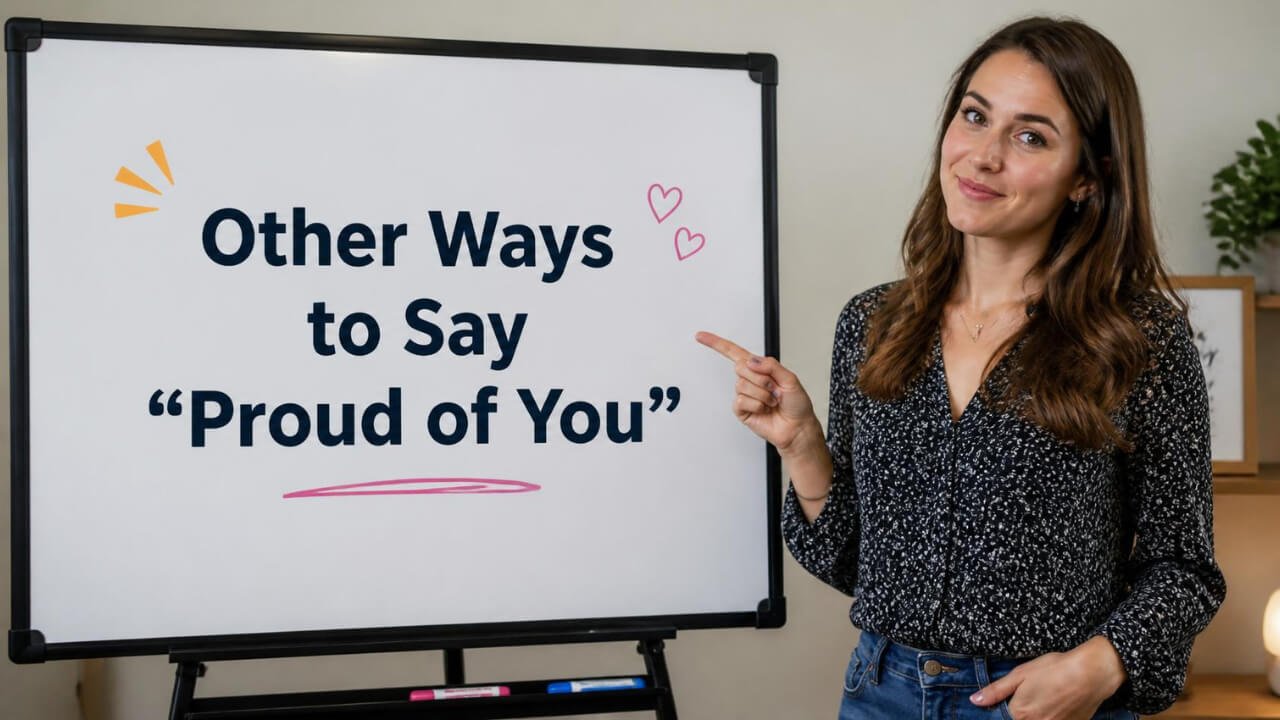

Exploring other ways to say proud of you helps you express admiration, encouragement, and emotional support with greater sincerity. The phrase is often used to recognize someone’s achievement, personal growth, courage, discipline, or effort. Whether a person has reached an important goal or simply continued through a difficult experience, thoughtful praise can make the moment feel more meaningful.
While “proud of you” is warm and positive, different expressions can highlight different emotions. Some phrases celebrate success, while others recognize perseverance, character, improvement, or dedication. Choosing words that match the person’s journey makes your appreciation sound personal rather than automatic.
What Does “Proud of You” Mean?
“Proud of you” means feeling pleased, impressed, or deeply satisfied because of another person’s actions, qualities, or progress. It communicates that their effort or behavior deserves recognition.
The phrase can celebrate a major accomplishment, but it can also honor quiet forms of strength, such as overcoming fear, making a responsible choice, learning from failure, or remaining committed during a difficult period.
Common Situations Where “Proud of You” Is Used
This phrase appears when someone deserves recognition, reassurance, or emotional encouragement. It can strengthen relationships by showing that their work and development have been noticed.
Common situations include:
- Celebrating an academic or professional achievement.
- Recognizing improvement after a difficult period.
- Praising someone for completing a challenging task.
Is It Professional or Polite to Say “Proud of You”?
Yes, “proud of you” is polite, positive, and emotionally supportive. It is natural in personal relationships, family conversations, education, mentoring, and friendly workplace communication.
In formal professional settings, however, the phrase may occasionally sound too personal or suggest a superior position. Alternatives such as “Your work is impressive,” “You handled that exceptionally well,” or “Your progress deserves recognition” can express appreciation more professionally.
The best wording depends on the relationship, the accomplishment, and the level of formality.
Pros and Cons
Pros
Saying “proud of you” offers emotional validation and shows that someone’s effort, growth, or achievement matters. It can increase confidence, strengthen trust, and encourage continued progress.
The phrase is also simple, warm, and easy to understand. When expressed sincerely, it can create a lasting positive memory.
Cons
The phrase can sound generic if it is not connected to a specific action or quality. Explaining why you feel proud usually makes the praise more meaningful.
It can also feel slightly patronizing in some professional relationships. In those cases, wording based on respect, admiration, or recognition may be more appropriate.
“Proud of You” Synonyms
Explore these meaningful alternatives to “proud of you”:
- You should be proud of yourself
- I admire what you have achieved
- You did an amazing job
- I am impressed by you
- You have come so far
- Your hard work paid off
- I knew you could do it
- You exceeded expectations
- You handled that beautifully
- Your progress is inspiring
- I celebrate your success
- You have every reason to feel proud
- Your achievement means a lot
- You made us proud
- I am thrilled for you
- You rose to the challenge
- You earned this moment
- Your dedication shows
- You accomplished something remarkable
- I respect your effort
- You have done yourself proud
- I believe in you
- You continue to amaze me
- Your growth is incredible
- You deserve this success
- I could not be happier for you
- You proved yourself
- Your perseverance is admirable
- You made it happen
- This is a wonderful achievement
- You have much to celebrate
- I appreciate your determination
- Your success is well deserved
- You should feel accomplished
- Watching you succeed brings me joy
You Should Be Proud of Yourself
Meaning: You deserve to feel pleased with your own achievement.
Explanation: This phrase encourages self recognition instead of focusing only on the speaker’s feelings.
Example: “You should be proud of yourself for completing such a demanding project.”
Best Use: Personal growth and meaningful achievements.
Worst Use: Situations where the person feels disappointed.
Tone: Encouraging and supportive.
I Admire What You Have Achieved
Meaning: Your accomplishment deserves genuine respect.
Explanation: This expression highlights both achievement and personal admiration.
Example: “I admire what you have achieved through patience and consistent effort.”
Best Use: Major milestones and formal praise.
Worst Use: Very small everyday tasks.
Tone: Respectful and sincere.
You Did an Amazing Job
Meaning: Your performance was exceptionally good.
Explanation: This phrase gives clear praise for a completed action or responsibility.
Example: “You did an amazing job presenting your ideas so confidently.”
Best Use: Projects, performances, and completed tasks.
Worst Use: Moments requiring emotional comfort rather than evaluation.
Tone: Enthusiastic and positive.
I Am Impressed by You
Meaning: Your ability, behavior, or progress has created admiration.
Explanation: It can recognize skill, courage, discipline, or maturity.
Example: “I am impressed by how calmly you managed that difficult situation.”
Best Use: Unexpectedly strong performance.
Worst Use: Highly emotional family moments where it may sound distant.
Tone: Admiring and direct.
You Have Come So Far
Meaning: You have made significant progress.
Explanation: This expression celebrates the person’s journey rather than only the final result.
Example: “You have come so far since you first began learning this skill.”
Best Use: Long term improvement and recovery.
Worst Use: Single achievements without a longer journey.
Tone: Warm and reflective.
Your Hard Work Paid Off
Meaning: Your effort produced a successful result.
Explanation: This phrase connects the achievement directly with discipline and persistence.
Example: “Your hard work paid off, and this result proves it.”
Best Use: Exams, projects, training, and career goals.
Worst Use: Success mainly caused by luck.
Tone: Appreciative and motivating.
I Knew You Could Do It
Meaning: I always believed in your ability.
Explanation: It combines praise with reassurance and confidence.
Example: “I knew you could do it, even when the challenge seemed overwhelming.”
Best Use: Accomplishments after uncertainty.
Worst Use: Situations where it might minimize the difficulty involved.
Tone: Confident and affectionate.
Read Also:
Other Ways to Say “Following Up”
You Exceeded Expectations
Meaning: Your result was better than anticipated.
Explanation: This professional alternative recognizes exceptional performance and quality.
Example: “You exceeded expectations with the accuracy and creativity of your work.”
Best Use: Workplace and academic praise.
Worst Use: Sensitive personal conversations.
Tone: Professional and approving.
You Handled That Beautifully
Meaning: You managed the situation with skill and grace.
Explanation: This phrase often praises emotional intelligence, patience, or thoughtful behavior.
Example: “You handled that difficult conversation beautifully.”
Best Use: Challenging interpersonal situations.
Worst Use: Technical achievements requiring precise evaluation.
Tone: Gentle and admiring.
Your Progress Is Inspiring
Meaning: Your improvement motivates and impresses others.
Explanation: It celebrates development, commitment, and visible change.
Example: “Your progress is inspiring because you never stopped trying.”
Best Use: Personal development and long term goals.
Worst Use: Minor accomplishments without measurable progress.
Tone: Uplifting and heartfelt.
I Celebrate Your Success
Meaning: I share your happiness and honor your achievement.
Explanation: This expression makes the praise feel joyful and generous.
Example: “I celebrate your success and everything you did to reach this point.”
Best Use: Major milestones and joyful occasions.
Worst Use: Quiet moments requiring understated wording.
Tone: Joyful and supportive.
You Have Every Reason to Feel Proud
Meaning: Your actions fully deserve personal satisfaction.
Explanation: This phrase validates the person’s achievement without making the praise about the speaker.
Example: “You have every reason to feel proud of the courage you showed.”
Best Use: Growth, bravery, and difficult achievements.
Worst Use: Situations where the person needs practical feedback.
Tone: Reassuring and affirming.
Your Achievement Means a Lot
Meaning: What you accomplished carries emotional importance.
Explanation: This alternative connects success with shared values or relationships.
Example: “Your achievement means a lot to everyone who supported your journey.”
Best Use: Family, community, and shared goals.
Worst Use: Routine professional feedback.
Tone: Emotional and appreciative.
You Made Us Proud
Meaning: Your actions brought pride to a group or family.
Explanation: It expresses shared admiration from several people.
Example: “You made us proud through your honesty and determination.”
Best Use: Family achievements and team representation.
Worst Use: Individual conversations where group approval is irrelevant.
Tone: Collective and affectionate.
I Am Thrilled for You
Meaning: I feel extremely happy about your success.
Explanation: This phrase emphasizes shared excitement more than personal pride.
Example: “I am thrilled for you and delighted that your effort was recognized.”
Best Use: Promotions, awards, and happy announcements.
Worst Use: Serious achievements requiring a calmer tone.
Tone: Excited and warm.
You Rose to the Challenge
Meaning: You responded successfully to a difficult situation.
Explanation: This alternative praises resilience, courage, and capable action.
Example: “You rose to the challenge and remained focused under pressure.”
Best Use: Difficult tasks and unexpected responsibilities.
Worst Use: Easy accomplishments without meaningful obstacles.
Tone: Strong and approving.
You Earned This Moment
Meaning: Your success came from deserving effort.
Explanation: It recognizes the time, sacrifice, and dedication behind an achievement.
Example: “You earned this moment through years of disciplined work.”
Best Use: Important milestones and awards.
Worst Use: Casual praise for ordinary tasks.
Tone: Meaningful and celebratory.
Your Dedication Shows
Meaning: Your commitment is visible in the result.
Explanation: This phrase praises the consistent work behind an accomplishment.
Example: “Your dedication shows in every carefully completed detail.”
Best Use: Creative, academic, and professional work.
Worst Use: Sudden achievements without sustained effort.
Tone: Observant and appreciative.
You Accomplished Something Remarkable
Meaning: You completed something unusually impressive.
Explanation: This expression gives strong recognition to a significant success.
Example: “You accomplished something remarkable by reaching this difficult goal.”
Best Use: Exceptional personal or professional milestones.
Worst Use: Minor everyday achievements.
Tone: Formal and admiring.
I Respect Your Effort
Meaning: Your determination and work deserve recognition.
Explanation: This phrase values effort even when the final result is imperfect.
Example: “I respect your effort and the courage it took to continue.”
Best Use: Difficult journeys and incomplete outcomes.
Worst Use: Celebrations focused entirely on victory.
Tone: Mature and compassionate.
You Have Done Yourself Proud
Meaning: Your actions reflect extremely well on you.
Explanation: This expression celebrates honorable conduct and personal accomplishment.
Example: “You have done yourself proud through your discipline and integrity.”
Best Use: Character, achievement, and personal responsibility.
Worst Use: Very casual conversations.
Tone: Traditional and approving.
I Believe in You
Meaning: I trust your ability and potential.
Explanation: Although it is not direct praise, it offers strong emotional encouragement.
Example: “I believe in you because you continue to face every challenge bravely.”
Best Use: Before or after a difficult experience.
Worst Use: Situations requiring specific recognition of completed work.
Tone: Supportive and hopeful.
You Continue to Amaze Me
Meaning: Your actions repeatedly create admiration.
Explanation: This phrase suggests that the person regularly exceeds expectations.
Example: “You continue to amaze me with your strength and creativity.”
Best Use: Close relationships and repeated growth.
Worst Use: Highly formal professional communication.
Tone: Affectionate and enthusiastic.
Your Growth Is Incredible
Meaning: Your personal development is highly impressive.
Explanation: It emphasizes transformation, maturity, and improvement.
Example: “Your growth is incredible, especially in the way you now trust yourself.”
Best Use: Emotional development and skill building.
Worst Use: One time achievements without visible growth.
Tone: Encouraging and emotional.
You Deserve This Success
Meaning: Your achievement is justified by your effort and character.
Explanation: This phrase validates both the result and the journey behind it.
Example: “You deserve this success because you remained committed through every setback.”
Best Use: Awards, promotions, and completed goals.
Worst Use: Outcomes obtained without meaningful effort.
Tone: Affirming and celebratory.
I Could Not Be Happier for You
Meaning: Your success brings me great happiness.
Explanation: This expression focuses on shared joy and sincere emotional support.
Example: “I could not be happier for you after seeing how hard you worked.”
Best Use: Close personal relationships.
Worst Use: Reserved professional communication.
Tone: Loving and joyful.
You Proved Yourself
Meaning: You demonstrated your ability or character.
Explanation: This phrase recognizes achievement after doubt, testing, or difficulty.
Example: “You proved yourself through calm judgment and consistent performance.”
Best Use: Competitive or demanding situations.
Worst Use: Relationships where the person should not need to prove their worth.
Tone: Strong and validating.
Your Perseverance Is Admirable
Meaning: Your refusal to give up deserves respect.
Explanation: This alternative praises resilience more than the final accomplishment.
Example: “Your perseverance is admirable because you continued despite repeated setbacks.”
Best Use: Long and difficult journeys.
Worst Use: Easy achievements completed quickly.
Tone: Respectful and inspiring.
You Made It Happen
Meaning: Your actions turned a goal into reality.
Explanation: This energetic phrase recognizes initiative and determination.
Example: “You made it happen by staying focused and solving every problem.”
Best Use: Projects and ambitious goals.
Worst Use: Formal ceremonies requiring polished language.
Tone: Energetic and confident.
This Is a Wonderful Achievement
Meaning: The accomplishment is important and worthy of celebration.
Explanation: This phrase offers balanced praise without sounding overly emotional.
Example: “This is a wonderful achievement that reflects your patience and skill.”
Best Use: Academic and professional milestones.
Worst Use: Moments requiring deeply personal encouragement.
Tone: Polished and positive.
You Have Much to Celebrate
Meaning: Your progress or success deserves joyful recognition.
Explanation: This phrase can honor several accomplishments at once.
Example: “You have much to celebrate after everything you achieved this year.”
Best Use: Milestones and periods of growth.
Worst Use: Small isolated tasks.
Tone: Festive and encouraging.
I Appreciate Your Determination
Meaning: I value your strong commitment to the goal.
Explanation: It highlights the person’s attitude and sustained motivation.
Example: “I appreciate your determination to improve even when progress felt slow.”
Best Use: Mentoring and professional feedback.
Worst Use: Celebrations focused only on the final result.
Tone: Respectful and thoughtful.
Your Success Is Well Deserved
Meaning: Your accomplishment fairly reflects your effort.
Explanation: This phrase recognizes that the outcome was earned.
Example: “Your success is well deserved after months of careful preparation.”
Best Use: Promotions, awards, and important results.
Worst Use: Casual daily praise.
Tone: Formal and congratulatory.
You Should Feel Accomplished
Meaning: You deserve satisfaction for completing something meaningful.
Explanation: This wording encourages the person to recognize their own progress.
Example: “You should feel accomplished after managing such a demanding responsibility.”
Best Use: Completed projects and personal goals.
Worst Use: Situations where the person still feels emotionally overwhelmed.
Tone: Reassuring and supportive.
Watching You Succeed Brings Me Joy
Meaning: Your success creates deep personal happiness for me.
Explanation: This expression connects pride with love, emotional closeness, and shared experience.
Example: “Watching you succeed brings me joy because I know what this journey required.”
Best Use: Family members, close friends, and mentors.
Worst Use: Formal workplace feedback.
Tone: Heartfelt and affectionate.
Conclusion
Using thoughtful alternatives to proud of you allows you to recognize more than a final result. You can celebrate someone’s courage, perseverance, maturity, discipline, or personal growth. Phrases such as “You earned this moment” honor hard work, while “Your progress is inspiring” focuses on the journey.
The most meaningful praise is specific and sincere. Instead of offering a general compliment, mention the quality or action that impressed you. Carefully chosen words can strengthen confidence, deepen emotional connection, and remind someone that their efforts have truly been noticed.
FAQs
What is another way to say “proud of you”?
You can say “I admire what you achieved,” “You have come so far,” “Your success is well deserved,” or “You should be proud of yourself.”
How can I say “proud of you” professionally?
You can say “Your work is impressive,” “You exceeded expectations,” or “Your achievement deserves recognition.”
What can I say instead of “proud of you” to a child?
You can say, “You worked very hard,” “You made a thoughtful choice,” or “You should feel proud of yourself.” These phrases help children recognize their own effort.
Can “proud of you” sound patronizing?
It can occasionally sound patronizing in formal or equal professional relationships. Expressions based on respect, admiration, and specific achievement may sound more appropriate.
How can I make the phrase more meaningful?
Explain exactly why you feel proud. Mention the person’s effort, courage, kindness, growth, or perseverance so the praise feels personal and genuine.