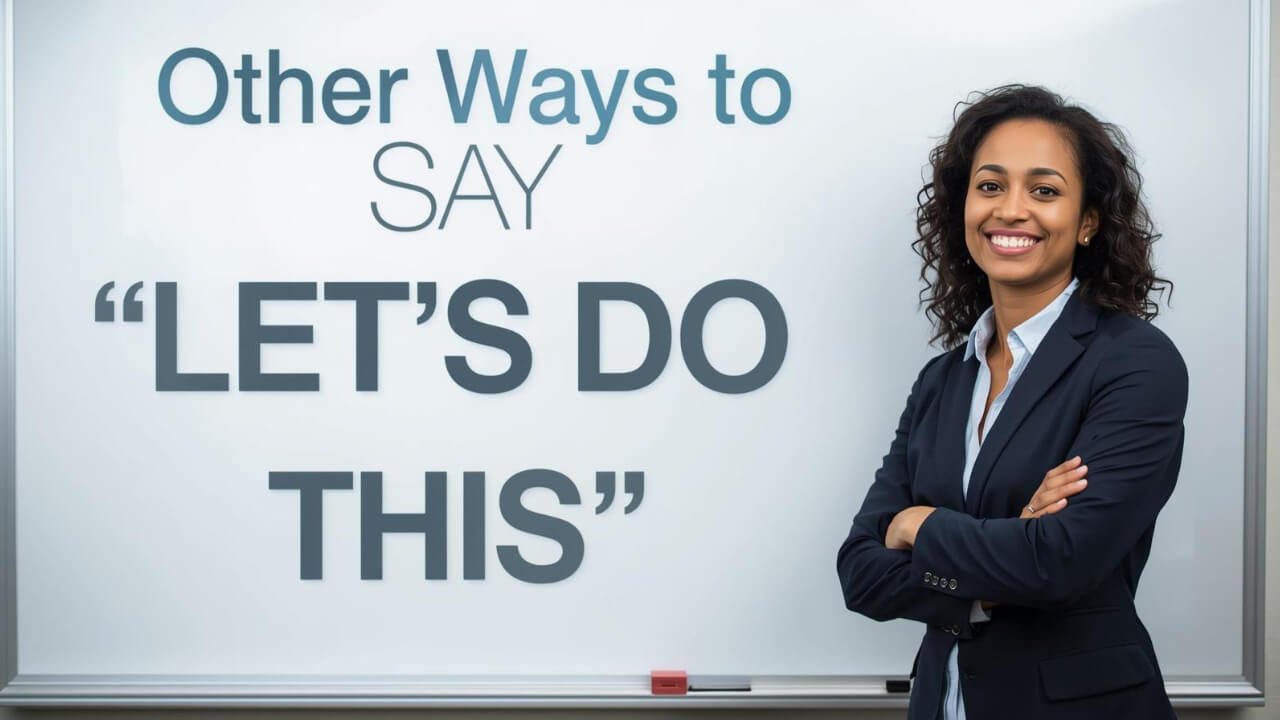

When exploring other ways to say let’s do this, it becomes clear how this energetic phrase connects with motivation, teamwork, confidence, and action oriented communication. It is often used to signal readiness, encourage participation, and build momentum in both casual conversations and professional environments. However, repeating the same phrase can reduce impact, especially when you want to express enthusiasm, determination, or leadership in different ways.
Communication plays a powerful role in shaping attitude, productivity, and group dynamics. By using varied alternatives to let’s do this, you can express drive, collaboration, and commitment more effectively. Choosing the right phrase depending on the situation helps maintain clarity, tone, and engagement, making your message more persuasive and inspiring.
What Does “Let’s Do This” Mean?
The phrase let’s do this is commonly used to express readiness to begin an action, complete a task, or take on a challenge. It reflects a sense of confidence, enthusiasm, and shared effort, often encouraging others to join in and move forward together.
Common Situations Where “Let’s Do This” Is Used
This phrase appears frequently in different communication settings, especially when initiating action or motivating others.
- When starting a task or project
- During teamwork or group activities
- In motivational or encouraging conversations
- Before taking on a challenge
- In casual and professional communication
Is It Professional/Polite to Say “Let’s Do This”?
Yes, let’s do this is acceptable in many professional and informal contexts, especially in collaborative environments. However, in formal situations, alternatives like “let us begin” or “we should proceed” may sound more polished and appropriate.
Pros and Cons
Pros
- Encourages action and motivation
- Builds a sense of teamwork
- Easy to understand and widely used
Cons
- Can feel informal in strict professional settings
- May sound repetitive
- Limited variation in tone
“Let’s Do This” Synonyms:

Explore these meaningful alternatives to “let’s do this”:
- Let’s Get Started
- Let’s Begin
- Time to Start
- Let’s Go for It
- Let’s Make It Happen
- Let’s Take Action
- Let’s Move Forward
- Let’s Kick Things Off
- Let’s Dive In
- Let’s Get Moving
- Let’s Take the First Step
- Let’s Put This into Action
- Let’s Jump In
- Let’s Roll
- Let’s Get to Work
- Let’s Push Ahead
- Let’s Start Now
- Let’s Take Charge
- Let’s Make a Start
- Let’s Proceed
- Let’s Do It Together
- Let’s Get Going
- Let’s Act Now
- Let’s Step In
- Let’s Get It Done
- Let’s Begin the Process
- Let’s Set Things in Motion
- Let’s Take the Lead
- Let’s Engage
- Let’s Initiate
- Let’s Put Plans into Motion
- Let’s Move Ahead
- Let’s Start the Journey
- Let’s Get This Started
- Let’s Get Down to It
Let’s Get Started
Meaning:
Begin something immediately.
Explanation:
A simple and widely used phrase that signals readiness to act.
Example:
“Everyone is ready, so let’s get started.”
Best Use:
Meetings and teamwork.
Worst Use:
Highly formal documents.
Tone:
Neutral, motivating
Let’s Begin
Meaning:
Start an activity or process.
Explanation:
A slightly more formal alternative.
Example:
“Let’s begin the discussion.”
Best Use:
Professional settings.
Worst Use:
Casual excitement.
Tone:
Formal, calm
Time to Start
Meaning:
Indicates the moment to begin.
Explanation:
Focuses on timing and readiness.
Example:
“It is time to start the project.”
Best Use:
General use.
Worst Use:
Motivational speech.
Tone:
Neutral
Let’s Go for It
Meaning:
Take action with enthusiasm.
Explanation:
Encourages boldness and confidence.
Example:
“We have the plan, let’s go for it.”
Best Use:
Motivational contexts.
Worst Use:
Formal writing.
Tone:
Energetic
Let’s Make It Happen
Meaning:
Turn plans into reality.
Explanation:
Focuses on execution and results.
Example:
“We have the idea, now let’s make it happen.”
Best Use:
Team motivation.
Worst Use:
Technical writing.
Tone:
Inspiring
Let’s Take Action
Meaning:
Begin doing something practical.
Explanation:
Emphasizes moving from planning to action.
Example:
“Let’s take action before it is too late.”
Best Use:
Professional communication.
Worst Use:
Casual talk.
Tone:
Formal, decisive
Let’s Move Forward
Meaning:
Continue with progress.
Explanation:
Suggests advancement and continuity.
Example:
“Let’s move forward with the proposal.”
Best Use:
Business settings.
Worst Use:
Casual conversations.
Tone:
Professional
Read Also:
Other Ways to Say “Hungry”

Let’s Kick Things Off
Meaning:
Start something in an engaging way.
Explanation:
Adds energy to the beginning of an activity.
Example:
“Let’s kick things off with introductions.”
Best Use:
Presentations.
Worst Use:
Formal reports.
Tone:
Semi formal
Let’s Dive In
Meaning:
Start quickly and enthusiastically.
Explanation:
Suggests immediate involvement.
Example:
“Let’s dive in and explore the topic.”
Best Use:
Informal or creative settings.
Worst Use:
Formal writing.
Tone:
Energetic
Let’s Get Moving
Meaning:
Begin action without delay.
Explanation:
Encourages quick progress.
Example:
“We are running late, let’s get moving.”
Best Use:
Everyday communication.
Worst Use:
Formal contexts.
Tone:
Casual
Let’s Take the First Step
Meaning:
Begin gradually.
Explanation:
Focuses on starting a process step by step.
Example:
“Let’s take the first step toward improvement.”
Best Use:
Motivational speech.
Worst Use:
Urgent situations.
Tone:
Encouraging
Let’s Put This into Action
Meaning:
Implement plans.
Explanation:
Moves from ideas to execution.
Example:
“Let’s put this into action today.”
Best Use:
Professional contexts.
Worst Use:
Casual talk.
Tone:
Formal
Let’s Jump In
Meaning:
Start immediately without hesitation.
Explanation:
Suggests quick involvement.
Example:
“Let’s jump in and solve the problem.”
Best Use:
Informal discussions.
Worst Use:
Formal writing.
Tone:
Casual
Let’s Roll
Meaning:
Start something quickly.
Explanation:
A casual and energetic phrase.
Example:
“Everything is ready, let’s roll.”
Best Use:
Friendly conversations.
Worst Use:
Professional documents.
Tone:
Informal
Let’s Get to Work
Meaning:
Begin working seriously.
Explanation:
Focuses on productivity and effort.
Example:
“We have a deadline, let’s get to work.”
Best Use:
Work environments.
Worst Use:
Relaxed conversations.
Tone:
Focused
Let’s Proceed
Meaning:
Move forward in a structured way.
Explanation:
A formal alternative often used in professional settings.
Example:
“Let’s proceed with the next step.”
Best Use:
Formal communication.
Worst Use:
Casual talk.
Tone:
Formal
Let’s Get It Done
Meaning:
Complete a task efficiently.
Explanation:
Emphasizes finishing the work.
Example:
“We have limited time, let’s get it done.”
Best Use:
Work and motivation.
Worst Use:
Formal writing.
Tone:
Determined
Let’s Push Ahead
Meaning:
Continue moving forward with effort.
Explanation:
Emphasizes persistence and determination while progressing.
Example:
“Despite challenges, let’s push ahead.”
Best Use:
Motivational and team settings.
Worst Use:
Casual conversations.
Tone:
Encouraging, determined
Let’s Start Now
Meaning:
Begin immediately without delay.
Explanation:
Highlights urgency and readiness.
Example:
“We have everything ready, let’s start now.”
Best Use:
General and professional use.
Worst Use:
Relaxed situations.
Tone:
Direct, urgent
Let’s Take Charge
Meaning:
Assume control and begin action.
Explanation:
Suggests leadership and initiative.
Example:
“Let’s take charge of this project.”
Best Use:
Leadership roles.
Worst Use:
Informal chats.
Tone:
Confident
Let’s Make a Start
Meaning:
Begin something gradually.
Explanation:
A softer alternative to initiating action.
Example:
“Let’s make a start on the plan.”
Best Use:
Calm discussions.
Worst Use:
Urgent contexts.
Tone:
Neutral
Let’s Do It Together
Meaning:
Work collaboratively.
Explanation:
Emphasizes teamwork and shared effort.
Example:
“Let’s do it together and finish faster.”
Best Use:
Team environments.
Worst Use:
Individual tasks.
Tone:
Supportive
Let’s Get Going
Meaning:
Begin moving or acting.
Explanation:
Encourages starting without delay.
Example:
“We are late, let’s get going.”
Best Use:
Casual situations.
Worst Use:
Formal writing.
Tone:
Informal
Let’s Act Now
Meaning:
Take immediate action.
Explanation:
Suggests urgency and importance.
Example:
“The issue is serious, let’s act now.”
Best Use:
Professional or urgent contexts.
Worst Use:
Relaxed conversations.
Tone:
Urgent, formal
Let’s Step In
Meaning:
Begin involvement or take action.
Explanation:
Often used when intervention is needed.
Example:
“Let’s step in and solve the issue.”
Best Use:
Problem solving situations.
Worst Use:
Casual chats.
Tone:
Neutral
Let’s Begin the Process
Meaning:
Start a structured activity.
Explanation:
Used when initiating a formal procedure.
Example:
“Let’s begin the process of evaluation.”
Best Use:
Professional and formal settings.
Worst Use:
Casual talk.
Tone:
Formal
Let’s Set Things in Motion
Meaning:
Start something that will progress over time.
Explanation:
Suggests initiating a chain of actions.
Example:
“Let’s set things in motion today.”
Best Use:
Strategic discussions.
Worst Use:
Everyday casual use.
Tone:
Formal, descriptive
Let’s Take the Lead
Meaning:
Start by leading others.
Explanation:
Indicates taking initiative and responsibility.
Example:
“Let’s take the lead on this project.”
Best Use:
Leadership roles.
Worst Use:
Informal use.
Tone:
Confident
Let’s Engage
Meaning:
Become actively involved.
Explanation:
Encourages participation and interaction.
Example:
“Let’s engage with the audience.”
Best Use:
Professional communication.
Worst Use:
Casual speech.
Tone:
Formal
Let’s Initiate
Meaning:
Formally begin something.
Explanation:
Often used in structured or official contexts.
Example:
“Let’s initiate the process.”
Best Use:
Technical or business writing.
Worst Use:
Informal conversations.
Tone:
Formal
Let’s Put Plans into Motion
Meaning:
Turn ideas into action.
Explanation:
Focuses on execution after planning.
Example:
“Let’s put plans into motion immediately.”
Best Use:
Business or project settings.
Worst Use:
Casual talk.
Tone:
Professional
Let’s Move Ahead
Meaning:
Continue forward with progress.
Explanation:
Suggests steady advancement.
Example:
“Let’s move ahead with confidence.”
Best Use:
Professional contexts.
Worst Use:
Informal speech.
Tone:
Neutral
Let’s Start the Journey
Meaning:
Begin a process or experience.
Explanation:
A more expressive and motivational phrase.
Example:
“Let’s start the journey toward success.”
Best Use:
Inspirational contexts.
Worst Use:
Technical writing.
Tone:
Motivational
Let’s Get This Started
Meaning:
Begin something immediately.
Explanation:
Adds emphasis to starting quickly.
Example:
“Everything is ready, let’s get this started.”
Best Use:
Casual and semi formal settings.
Worst Use:
Strict formal writing.
Tone:
Energetic
Let’s Get Down to It
Meaning:
Focus and begin seriously.
Explanation:
Suggests moving directly to the task.
Example:
“Enough discussion, let’s get down to it.”
Best Use:
Work environments.
Worst Use:
Casual relaxed settings.
Tone:
Direct, focused
Conclusion
Using alternatives to let’s do this helps you express motivation, readiness, and teamwork in more dynamic ways. Each phrase carries a slightly different tone, allowing you to match your words with the situation, audience, and level of formality. This variety strengthens both spoken communication and written expression, making your message more engaging and impactful.
Expanding your vocabulary around action oriented language, collaboration, and leadership improves clarity and influence. By selecting the right expression, you can inspire action, build confidence, and communicate your intentions with greater precision and energy.
FAQs
Is “let’s do this” formal or informal?
It is generally informal but acceptable in many professional settings.
What is a formal alternative?
Phrases like “let’s proceed” or “let’s begin” are more formal.
Can I use these phrases in daily conversation?
Yes, many of them fit naturally in everyday speech.
Do these alternatives improve communication?
Yes, they add variety and make your message more engaging.
How do I choose the right phrase?
Consider the tone, audience, and context of your situation.