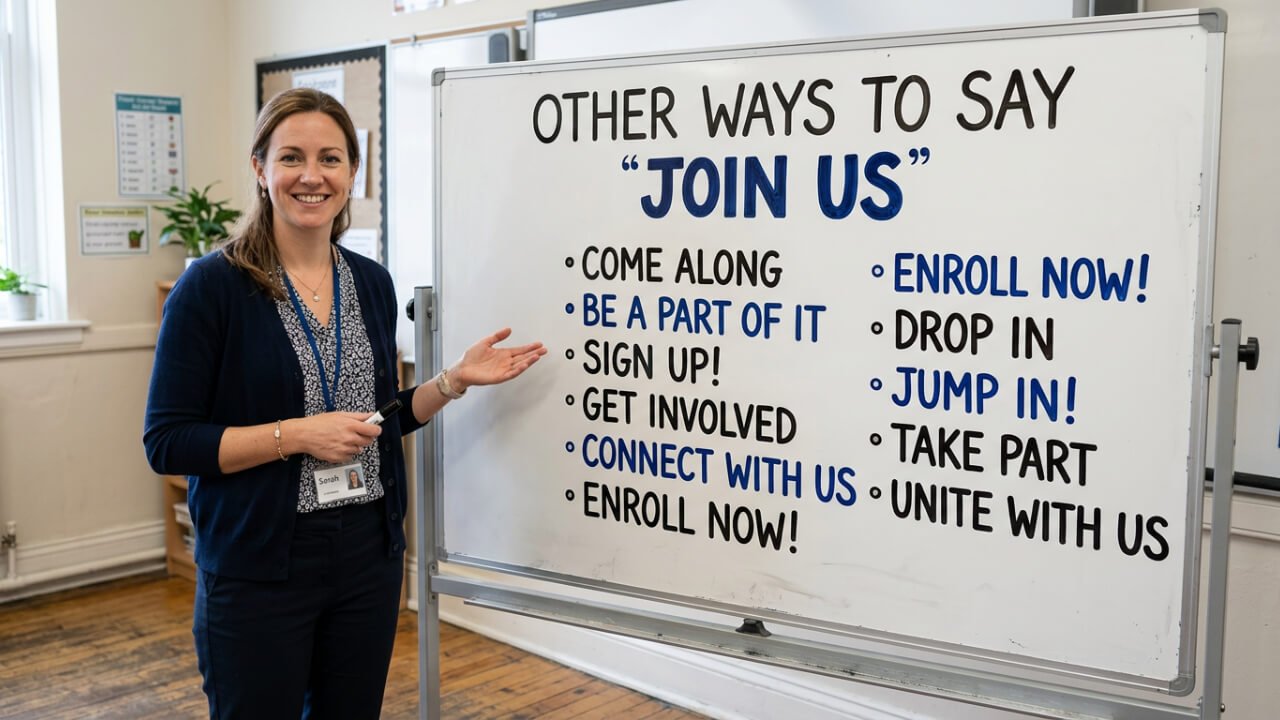

When looking for other ways to say “join us”, it is important to understand how this phrase works in invitations, group communication, community building, and friendly requests. People use it when they want someone to become part of an activity, event, team, discussion, program, or shared experience. Although it is short and clear, using different phrases can make your message sound more natural, welcoming, and suitable for the situation.
Thoughtful wording can improve tone, connection, participation, and audience engagement. In formal invitations, casual conversations, event announcements, team messages, and community communication, the right alternative helps people feel included instead of pressured. Choosing a phrase that matches the context makes your invitation sound warm, respectful, and easy to accept.
What Does “Join Us” Mean?
The phrase “join us” means come with us, be part of our group, or take part in something we are doing. It is used when inviting someone to participate in an activity, attend an event, enter a discussion, or become connected with a group.
In communication, “join us” works as an invitation phrase. It creates a sense of belonging, involvement, and shared experience. Depending on tone, it can sound friendly, professional, exciting, formal, or welcoming.
Common Situations Where “Join Us” Is Used
People use “join us” when they want to invite someone into a group, event, activity, or conversation. It appears in both personal and professional communication where participation matters.
- When inviting people to an event or gathering.
- During team communication to welcome new members.
- In community messages to encourage participation.
Is It Professional/Polite to Say “Join Us”?
Yes, “join us” is polite and professional when used in the right context. It sounds direct, welcoming, and easy to understand. In friendly communication, it feels warm because it invites people to participate without using complicated wording.
However, in more formal or professional settings, alternatives like “we invite you to attend”, “be part of our session”, or “we would be pleased to have you with us” may sound more polished. These phrases create a respectful tone while still encouraging participation.
Pros and Cons
Pros
- Sounds clear and easy to understand.
- Creates a welcoming invitation.
- Encourages participation and connection.
Cons
- Can sound too simple in formal writing.
- May feel repeated if used often.
- Does not always explain the purpose of the invitation.
“Join Us” Synonyms:
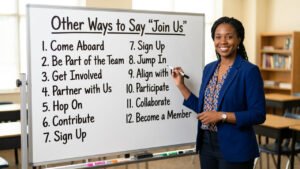
Explore these meaningful alternatives to “join us”:
- Come Along
- Be Part of Us
- Come With Us
- Take Part
- Get Involved
- Be a Part of This
- Join In
- Participate With Us
- Come Be With Us
- Step In With Us
- Be Included
- Come Together With Us
- Take Your Place With Us
- Become Part of Our Group
- Stand With Us
- Share This Moment With Us
- Come On Board
- Be With Us
- Take Part With Us
- Get Connected With Us
- Enter the Conversation
- Come Share the Experience
- Join the Gathering
- Be Present With Us
- Walk With Us
- Become Involved
- Add Your Voice
- Come Into the Circle
- Take a Seat With Us
- Be Among Us
- Come Participate
- Share in This
- Accept Our Invitation
- Let Us Welcome You
- We Invite You to Attend
Come Along
Meaning:
Invites someone to go somewhere or take part in an activity.
Explanation:
A friendly phrase used in casual invitations, outings, simple plans, and relaxed group activities.
Example:
“Come along and enjoy the evening with everyone.”
Best Use:
Friendly gatherings, casual plans, and informal activities.
Worst Use:
Highly formal invitations or official notices.
Tone:
Friendly, casual, welcoming
Be Part of Us
Meaning:
Invites someone to belong to a group or shared purpose.
Explanation:
This phrase creates a strong feeling of belonging, connection, and group identity.
Example:
“Be part of us as we begin this new journey together.”
Best Use:
Community messages, teams, and meaningful invitations.
Worst Use:
Quick casual plans that need simple wording.
Tone:
Warm, inclusive, emotional
Come With Us
Meaning:
Invites someone to accompany a person or group.
Explanation:
A clear and natural phrase used when asking someone to move, attend, or participate together.
Example:
“Come with us and see how the event unfolds.”
Best Use:
Trips, gatherings, activities, and friendly plans.
Worst Use:
Formal written communication.
Tone:
Simple, direct, friendly
Take Part
Meaning:
Means to participate in an activity or event.
Explanation:
This phrase focuses on active involvement rather than simply being present.
Example:
“Take part in the discussion and share your ideas.”
Best Use:
Events, workshops, discussions, and learning activities.
Worst Use:
Personal invitations that need warmth.
Tone:
Clear, active, neutral
Get Involved
Meaning:
Encourages someone to participate actively.
Explanation:
A strong phrase used when inviting people to contribute time, effort, ideas, or support.
Example:
“Get involved and help make the program more meaningful.”
Best Use:
Community work, projects, activities, and group efforts.
Worst Use:
Formal ceremonies or gentle personal invitations.
Tone:
Encouraging, active, motivating
Be a Part of This
Meaning:
Invites someone to take part in a specific moment, event, or purpose.
Explanation:
This phrase sounds meaningful because it shows that the invitation has importance.
Example:
“Be a part of this special gathering and share the experience.”
Best Use:
Events, milestones, group activities, and meaningful occasions.
Worst Use:
Technical instructions or short notices.
Tone:
Warm, inviting, meaningful
Join In
Meaning:
Means to begin participating in something already happening.
Explanation:
A short phrase used when inviting someone into an activity, conversation, or shared moment.
Example:
“Join in whenever you are ready to share your thoughts.”
Best Use:
Games, discussions, activities, and casual group settings.
Worst Use:
Formal invitations requiring polished wording.
Tone:
Casual, open, friendly
Read Also:
Other Ways to Say “Me Too”

Participate With Us
Meaning:
Invites someone to take part together with a group.
Explanation:
This phrase sounds more formal than “join us” and highlights shared involvement.
Example:
“Participate with us in the session and share your perspective.”
Best Use:
Workshops, meetings, programs, and formal activities.
Worst Use:
Relaxed conversation with friends.
Tone:
Formal, clear, respectful
Come Be With Us
Meaning:
Invites someone to share presence and time with others.
Explanation:
A warm phrase that focuses on connection, togetherness, and emotional presence.
Example:
“Come be with us as we celebrate this important day.”
Best Use:
Family events, celebrations, and heartfelt invitations.
Worst Use:
Strict professional communication.
Tone:
Warm, personal, gentle
Step In With Us
Meaning:
Invites someone to enter an activity or shared effort.
Explanation:
This phrase suggests movement into a group, plan, or meaningful experience.
Example:
“Step in with us as we begin the next stage.”
Best Use:
Team messages, group efforts, and new beginnings.
Worst Use:
Very casual hangouts.
Tone:
Encouraging, active, supportive
Be Included
Meaning:
Means to become part of a group, plan, or experience.
Explanation:
This phrase focuses on acceptance and belonging within a shared situation.
Example:
“Be included in the conversation and share your ideas freely.”
Best Use:
Welcoming messages, inclusive communication, and group settings.
Worst Use:
Exciting event invitations that need energy.
Tone:
Inclusive, calm, respectful
Come Together With Us
Meaning:
Invites people to unite for a shared purpose.
Explanation:
A thoughtful phrase used when togetherness, cooperation, or support is important.
Example:
“Come together with us to create something meaningful.”
Best Use:
Community events, group efforts, and shared causes.
Worst Use:
Simple personal plans.
Tone:
Unified, warm, meaningful
Take Your Place With Us
Meaning:
Invites someone to belong and participate confidently.
Explanation:
This phrase makes the invitation feel personal, important, and respectful.
Example:
“Take your place with us and bring your voice to the discussion.”
Best Use:
Team welcomes, communities, programs, and formal invitations.
Worst Use:
Casual plans with close friends.
Tone:
Respectful, empowering, welcoming
Become Part of Our Group
Meaning:
Means to officially or naturally join a group.
Explanation:
This phrase is clear and useful when inviting someone into a team, class, circle, or community.
Example:
“Become part of our group and share your ideas with others.”
Best Use:
Teams, clubs, classes, and communities.
Worst Use:
Short casual invitations.
Tone:
Clear, direct, inclusive
Stand With Us
Meaning:
Invites someone to support a shared belief, effort, or purpose.
Explanation:
This phrase carries a stronger emotional meaning and suggests unity, loyalty, and support.
Example:
“Stand with us as we work toward a better outcome.”
Best Use:
Support messages, serious efforts, and meaningful causes.
Worst Use:
Light entertainment or casual gatherings.
Tone:
Strong, serious, united
Share This Moment With Us
Meaning:
Invites someone to be present for a meaningful occasion.
Explanation:
This phrase sounds warm and emotional because it focuses on shared memory and presence.
Example:
“Share this moment with us as we celebrate a new beginning.”
Best Use:
Celebrations, ceremonies, milestones, and family events.
Worst Use:
Technical meetings or routine notices.
Tone:
Heartfelt, warm, graceful
Come On Board
Meaning:
Means to join a team, plan, or project.
Explanation:
A common professional phrase used when inviting someone into a group effort or organized plan.
Example:
“Come on board and help us move the project forward.”
Best Use:
Teams, projects, workplace messages, and collaboration.
Worst Use:
Formal ceremonies or emotional invitations.
Tone:
Professional, friendly, active
Be With Us
Meaning:
Invites someone to share presence with a group.
Explanation:
This phrase is simple but warm, especially when presence matters more than action.
Example:
“Be with us for an evening of conversation and connection.”
Best Use:
Events, gatherings, personal invitations, and warm messages.
Worst Use:
Detailed professional instructions.
Tone:
Gentle, welcoming, personal
Take Part With Us
Meaning:
Encourages someone to participate alongside others.
Explanation:
This phrase combines invitation with shared action, making it useful for organized activities.
Example:
“Take part with us in the workshop and learn together.”
Best Use:
Programs, group sessions, classes, and activities.
Worst Use:
Very casual chats.
Tone:
Clear, inviting, cooperative
Get Connected With Us
Meaning:
Invites someone to build contact, relationship, or involvement.
Explanation:
This phrase focuses on connection rather than one time participation.
Example:
“Get connected with us and stay close to future opportunities.”
Best Use:
Communities, groups, programs, and ongoing communication.
Worst Use:
Formal academic writing.
Tone:
Friendly, open, engaging
Enter the Conversation
Meaning:
Invites someone to contribute to a discussion.
Explanation:
A thoughtful phrase used when someone’s opinion, voice, or perspective is welcomed.
Example:
“Enter the conversation and share what you think about the topic.”
Best Use:
Discussions, panels, meetings, and thoughtful exchanges.
Worst Use:
Physical events where attendance is the main goal.
Tone:
Intellectual, respectful, inviting
Come Share the Experience
Meaning:
Invites someone to enjoy or take part in an experience together.
Explanation:
This phrase is warm because it emphasizes the value of shared time and participation.
Example:
“Come share the experience and enjoy the day with everyone.”
Best Use:
Events, activities, travel, and celebrations.
Worst Use:
Formal workplace instructions.
Tone:
Warm, friendly, expressive
Join the Gathering
Meaning:
Invites someone to attend a group event.
Explanation:
This phrase is suitable for gatherings where people come together for a shared purpose or occasion.
Example:
“Join the gathering and spend a meaningful evening with us.”
Best Use:
Meetings, celebrations, community events, and group occasions.
Worst Use:
Private one on one invitations.
Tone:
Welcoming, calm, traditional
Be Present With Us
Meaning:
Invites someone to attend and share the moment.
Explanation:
This phrase highlights presence, attention, and emotional connection.
Example:
“Be present with us as we mark this important occasion.”
Best Use:
Ceremonies, meaningful events, and personal invitations.
Worst Use:
Casual activities or quick plans.
Tone:
Respectful, warm, sincere
Walk With Us
Meaning:
Invites someone to share a journey or support a purpose.
Explanation:
This phrase can be literal or symbolic, often suggesting companionship, unity, and shared direction.
Example:
“Walk with us as we move toward a brighter future.”
Best Use:
Support messages, meaningful journeys, and community efforts.
Worst Use:
Basic event invitations.
Tone:
Poetic, supportive, meaningful
Become Involved
Meaning:
Means to start participating in something.
Explanation:
A formal and clear phrase used when encouraging active participation in a plan, program, or activity.
Example:
“Become involved in the project and contribute your skills.”
Best Use:
Professional programs, communities, and organized efforts.
Worst Use:
Friendly casual invitations.
Tone:
Formal, practical, direct
Add Your Voice
Meaning:
Invites someone to share their opinion or perspective.
Explanation:
This phrase values someone’s ideas and encourages active contribution in a discussion.
Example:
“Add your voice to the discussion and help shape the decision.”
Best Use:
Meetings, community talks, feedback, and group discussions.
Worst Use:
Events where speaking is not expected.
Tone:
Respectful, encouraging, inclusive
Come Into the Circle
Meaning:
Invites someone into a close group or shared space.
Explanation:
This phrase creates a sense of acceptance, warmth, and belonging.
Example:
“Come into the circle and feel welcome among friends.”
Best Use:
Support groups, close communities, and warm invitations.
Worst Use:
Formal business communication.
Tone:
Warm, personal, inclusive
Take a Seat With Us
Meaning:
Invites someone to sit, attend, or become part of a discussion.
Explanation:
This phrase sounds friendly and welcoming because it creates a relaxed sense of presence.
Example:
“Take a seat with us and enjoy the conversation.”
Best Use:
Meetings, meals, gatherings, and informal discussions.
Worst Use:
Online invitations or action based activities.
Tone:
Friendly, welcoming, relaxed
Be Among Us
Meaning:
Means to be present as part of a group.
Explanation:
This phrase sounds respectful and slightly formal, often used for meaningful gatherings.
Example:
“Be among us as we celebrate this important occasion.”
Best Use:
Formal events, ceremonies, and respectful invitations.
Worst Use:
Everyday casual hangouts.
Tone:
Formal, graceful, welcoming
Come Participate
Meaning:
Invites someone to actively take part.
Explanation:
A direct phrase that encourages action, involvement, and contribution.
Example:
“Come participate in the session and share your thoughts.”
Best Use:
Classes, workshops, activities, and discussions.
Worst Use:
Emotional personal invitations.
Tone:
Direct, active, clear
Share in This
Meaning:
Invites someone to take part in a shared moment or experience.
Explanation:
This phrase feels gentle and meaningful, especially for important occasions or celebrations.
Example:
“Share in this day with us and make the memory brighter.”
Best Use:
Celebrations, milestones, ceremonies, and personal moments.
Worst Use:
Formal instructions or workplace tasks.
Tone:
Warm, meaningful, graceful
Accept Our Invitation
Meaning:
Asks someone to agree to attend or participate.
Explanation:
This phrase sounds polite and formal, making it suitable for respectful written invitations.
Example:
“Accept our invitation to attend the evening gathering.”
Best Use:
Formal invitations, events, ceremonies, and written messages.
Worst Use:
Casual plans with friends.
Tone:
Formal, polite, respectful
Let Us Welcome You
Meaning:
Invites someone by offering a warm welcome.
Explanation:
This phrase focuses on hospitality, kindness, and making the person feel valued.
Example:
“Let us welcome you into a space of learning and connection.”
Best Use:
Introductions, formal welcomes, communities, and events.
Worst Use:
Quick casual replies.
Tone:
Warm, graceful, respectful
We Invite You to Attend
Meaning:
A formal way to ask someone to come to an event.
Explanation:
This phrase is polished and suitable for professional, academic, or ceremonial invitations.
Example:
“We invite you to attend the session and take part in the discussion.”
Best Use:
Formal events, meetings, ceremonies, and professional invitations.
Worst Use:
Relaxed conversations.
Tone:
Formal, polished, respectful
Conclusion
Using alternatives to “join us” helps make your invitation language more natural, warm, and effective. The right phrase can encourage participation, create belonging, and make people feel genuinely welcome. Whether you are inviting someone to an event, group, discussion, or activity, your wording shapes how the invitation feels.
Better phrases also improve tone, clarity, and communication style. Casual options like “come along” work well with friends, while formal phrases like “we invite you to attend” suit professional invitations. By choosing words carefully, you can make every invitation sound more thoughtful, respectful, and engaging.
FAQs
What is another way to say “join us”?
You can say “come along”, “be part of us”, “take part”, or “we invite you to attend.” These phrases make invitations sound natural and clear.
Is “join us” polite?
Yes, “join us” is polite and friendly. It works well for casual invitations, group activities, events, and simple welcoming messages.
Can I use “join us” professionally?
Yes, you can use “join us” professionally, but more formal alternatives like “we invite you to attend” or “participate with us” may sound more polished.
What is a formal alternative to “join us”?
A formal alternative is “we invite you to attend.” You can also use “accept our invitation” or “participate with us” for respectful communication.
What is a friendly way to say “join us”?
A friendly way to say “join us” is “come along”, “come with us”, or “come share the experience.” These phrases sound warm and welcoming.