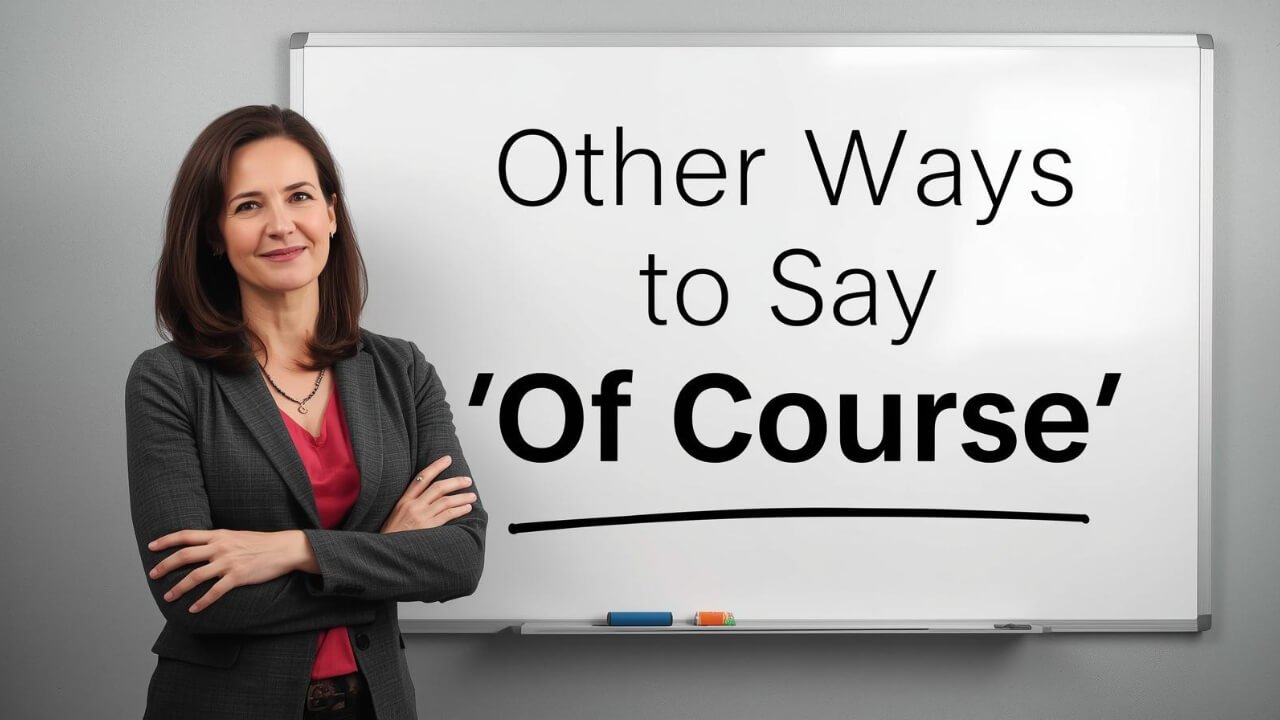

Clear and confident responses are essential in communication, professional interaction, and everyday conversations. When exploring other ways to say of course, it becomes evident that this simple phrase carries strong meaning related to agreement, assurance, and willingness. While it is widely used, repeating it too often can make your language feel predictable and less expressive.
In both formal and casual settings, tone, context, and intent shape how your message is received. Using varied alternatives helps enhance clarity, improves conversation flow, and reflects a more thoughtful approach to communication. Expanding your vocabulary allows you to respond with greater precision, making your interactions more engaging and impactful.
What Does “Of Course” Mean?
The phrase “of course” is commonly used to express agreement, certainty, or willingness. It indicates that something is obvious, expected, or gladly accepted, reinforcing confidence and assurance in communication.
Common Situations Where “Of Course” Is Used
This phrase appears in various communication contexts where clarity and affirmation are needed.
- When agreeing with someone’s statement
- While granting permission or approval
- In response to a request or question
- During professional discussions
- In everyday casual conversations
Is It Professional or Polite to Say “Of Course”?
Yes, “of course” is both professional and polite, especially when used appropriately. However, in some situations, it may sound overly direct or assumed. Using alternative expressions can help maintain a more balanced tone, making your communication feel more refined and context appropriate.
Pros and Cons
Pros
- Shows clear agreement and confidence
- Enhances communication efficiency
- Suitable for multiple contexts
Cons
- Can sound too direct at times
- May feel repetitive with frequent use
- Lacks variation in tone
“Of Course” Synonyms:
Explore these meaningful alternatives to “of course”:
• Certainly
• Absolutely
• Sure
• Definitely
• Without a doubt
• By all means
• Of course indeed
• Naturally
• No problem
• For sure
• Affirmative
• Yes indeed
• Gladly
• With pleasure
• Undoubtedly
• No doubt
• You bet
• Sure thing
• Of course not a problem
• It goes without saying
• That is correct
• I agree
• Without question
• Positively
• Assuredly
• That is certain
• Right away
• Always
• I would be happy to
• It is understood
• No hesitation
• With certainty
• That sounds good
• Count on it
• Absolutely yes
Certainly
Meaning:
Expresses firm agreement or willingness
Explanation:
This word conveys a clear and confident response, often used in formal communication and professional settings where assurance is important. It reflects reliability and respect in tone.
Example:
“Certainly, I will complete the task on time.”
Best Use:
Professional emails, formal discussions
Worst Use:
Very casual or playful conversations
Tone:
Formal, confident
Absolutely
Meaning:
Shows strong agreement or approval
Explanation:
A powerful expression that emphasizes complete certainty. It adds enthusiasm and conviction, making the response feel more energetic and assertive.
Example:
“Absolutely, I agree with your idea.”
Best Use:
Both professional and casual contexts
Worst Use:
Situations requiring neutral tone
Tone:
Strong, confident
Sure
Meaning:
Indicates willingness or agreement
Explanation:
A simple and versatile word commonly used in everyday conversations. It feels natural and relaxed, making it suitable for quick responses.
Example:
“Sure, I can help you with that.”
Best Use:
Casual communication
Worst Use:
Highly formal writing
Tone:
Neutral, informal
Definitely
Meaning:
Expresses certainty and assurance
Explanation:
Used to confirm something with confidence, this word strengthens the message and leaves little room for doubt.
Example:
“Definitely, I will attend the meeting.”
Best Use:
General communication
Worst Use:
Very formal documents
Tone:
Confident
Without a Doubt
Meaning:
Indicates complete certainty
Explanation:
This phrase emphasizes that there is no uncertainty in the statement, making it ideal for strong affirmations.
Example:
“Without a doubt, this is the best approach.”
Best Use:
Formal discussions
Worst Use:
Casual replies
Tone:
Strong, formal
By All Means
Meaning:
Gives full permission or encouragement
Explanation:
A polite and somewhat formal phrase used when allowing someone to proceed. It reflects openness and support.
Example:
“By all means, go ahead with your plan.”
Best Use:
Formal or respectful conversations
Worst Use:
Quick casual responses
Tone:
Formal, courteous
Naturally
Meaning:
Indicates something is expected or obvious
Explanation:
This word suggests that the response is logical or anticipated, often used in refined communication.
Example:
“Naturally, we will support the initiative.”
Best Use:
Formal writing and speech
Worst Use:
Informal chats
Tone:
Polished
Read Also:
Other Ways to Say You Are Welcome

For Sure
Meaning:
Confirms agreement in a relaxed way
Explanation:
A casual phrase that communicates certainty while maintaining a friendly tone.
Example:
“For sure, I will join you later.”
Best Use:
Informal conversations
Worst Use:
Professional settings
Tone:
Casual
Affirmative
Meaning:
Formal confirmation of agreement
Explanation:
Often used in structured or precise communication, this term clearly signals approval or confirmation.
Example:
“Affirmative, the request has been approved.”
Best Use:
Technical or formal communication
Worst Use:
Casual speech
Tone:
Formal, precise
Yes Indeed
Meaning:
Emphasizes agreement
Explanation:
A slightly expressive phrase that adds emphasis while confirming something positively.
Example:
“Yes indeed, that is correct.”
Best Use:
Polite conversations
Worst Use:
Highly formal documents
Tone:
Warm, positive
Gladly
Meaning:
Shows willingness with pleasure
Explanation:
This word expresses that the action is done happily, making the response feel more personal and sincere.
Example:
“Gladly, I will assist you.”
Best Use:
Friendly or polite contexts
Worst Use:
Strict formal communication
Tone:
Warm
With Pleasure
Meaning:
Indicates enjoyment in agreeing
Explanation:
A courteous phrase that reflects both willingness and politeness, often used in refined communication.
Example:
“With pleasure, I will help you.”
Best Use:
Professional and formal settings
Worst Use:
Very casual use
Tone:
Polite, formal
Undoubtedly
Meaning:
Expresses strong certainty
Explanation:
A formal term used to show that something is unquestionably true or agreed upon.
Example:
“Undoubtedly, this is the right choice.”
Best Use:
Formal writing
Worst Use:
Casual speech
Tone:
Formal
No Doubt
Meaning:
Indicates strong certainty
Explanation:
Confirms agreement with complete confidence.
Example:
“No doubt, this will work.”
Best Use:
General communication
Worst Use:
Highly formal writing
Tone:
Confident
You Bet
Meaning:
Shows enthusiastic agreement
Explanation:
A friendly and energetic way to confirm something.
Example:
“You bet, I will be there.”
Best Use:
Casual conversations
Worst Use:
Formal contexts
Tone:
Casual
Sure Thing
Meaning:
Indicates easy willingness
Explanation:
A relaxed phrase that expresses readiness to help.
Example:
“Sure thing, I will handle it.”
Best Use:
Informal settings
Worst Use:
Professional communication
Tone:
Friendly
Of Course Not a Problem
Meaning:
Shows agreement without inconvenience
Explanation:
Reassures that fulfilling the request is easy.
Example:
“Of course, not a problem at all.”
Best Use:
Customer support tone
Worst Use:
Formal writing
Tone:
Reassuring
It Goes Without Saying
Meaning:
Indicates something obvious
Explanation:
Suggests the answer is naturally understood.
Example:
“It goes without saying, I will help.”
Best Use:
Formal discussions
Worst Use:
Casual chats
Tone:
Formal
That Is Correct
Meaning:
Confirms accuracy
Explanation:
Used to validate a statement clearly.
Example:
“That is correct, your answer is right.”
Best Use:
Academic or professional settings
Worst Use:
Casual replies
Tone:
Formal
I Agree
Meaning:
Shows agreement with an idea
Explanation:
A straightforward way to express alignment.
Example:
“I agree with your suggestion.”
Best Use:
Discussions
Worst Use:
Permission responses
Tone:
Neutral
Without Question
Meaning:
Expresses certainty without doubt
Explanation:
Confirms something strongly and clearly.
Example:
“Without question, this is correct.”
Best Use:
Formal communication
Worst Use:
Casual use
Tone:
Strong
Positively
Meaning:
Indicates firm affirmation
Explanation:
Adds emphasis to agreement confidently.
Example:
“Positively, I will complete it.”
Best Use:
Formal tone
Worst Use:
Casual speech
Tone:
Assertive
Assuredly
Meaning:
Expresses guaranteed certainty
Explanation:
A formal way to confirm something confidently.
Example:
“Assuredly, it will be done.”
Best Use:
Professional writing
Worst Use:
Everyday conversations
Tone:
Formal
That Is Certain
Meaning:
Confirms something with clarity
Explanation:
Indicates no doubt about a statement.
Example:
“That is certain, we will proceed.”
Best Use:
Formal discussions
Worst Use:
Casual talk
Tone:
Confident
Right Away
Meaning:
Indicates immediate agreement
Explanation:
Shows readiness to act without delay.
Example:
“I will do it right away.”
Best Use:
Task based communication
Worst Use:
General agreement
Tone:
Responsive
Always
Meaning:
Shows consistent willingness
Explanation:
Indicates ongoing readiness to agree or help.
Example:
“Always, I am here to assist.”
Best Use:
Supportive tone
Worst Use:
Formal writing
Tone:
Warm
I Would Be Happy To
Meaning:
Expresses willingness with positivity
Explanation:
A polite and complete way to agree.
Example:
“I would be happy to help.”
Best Use:
Professional communication
Worst Use:
Short replies
Tone:
Polite
It Is Understood
Meaning:
Indicates agreement without further discussion
Explanation:
Shows mutual clarity and acceptance.
Example:
“It is understood, we will proceed.”
Best Use:
Formal contexts
Worst Use:
Casual conversations
Tone:
Formal
No Hesitation
Meaning:
Shows immediate agreement
Explanation:
Indicates readiness without doubt.
Example:
“I will agree with no hesitation.”
Best Use:
Strong decisions
Worst Use:
Casual talk
Tone:
Confident
With Certainty
Meaning:
Indicates complete assurance
Explanation:
Confirms something without any doubt.
Example:
“With certainty, this is correct.”
Best Use:
Formal writing
Worst Use:
Casual use
Tone:
Formal
That Sounds Good
Meaning:
Shows approval of an idea
Explanation:
A friendly way to agree with suggestions.
Example:
“That sounds good, let us proceed.”
Best Use:
Casual or semi formal settings
Worst Use:
Strict formal documents
Tone:
Positive
Count on It
Meaning:
Expresses reliable agreement
Explanation:
Assures that something will definitely happen.
Example:
“Count on it, I will be there.”
Best Use:
Commitment situations
Worst Use:
Formal writing
Tone:
Confident
Absolutely Yes
Meaning:
Strong and clear agreement
Explanation:
Emphasizes full approval with confidence.
Example:
“Absolutely yes, I support this.”
Best Use:
Enthusiastic responses
Worst Use:
Formal contexts
Tone:
Energetic
Conclusion
Using alternatives to of course improves communication quality, enhances clarity, and helps create more engaging interactions. Thoughtful word choices allow your responses to match the tone, context, and intent, making your communication more effective and refined.
By expanding your vocabulary, you avoid repetition and express ideas with greater precision. Whether in professional discussions or everyday conversations, selecting the right phrase ensures your message remains confident, clear, and impactful.
FAQs
Is “of course” formal or informal?
It can be used in both, depending on context and tone.
What is the best alternative in professional settings?
“Certainly” or “absolutely” are strong choices.
Can I use casual alternatives daily?
Yes, casual phrases work well in friendly communication.
Why should I avoid repeating “of course”?
It can make your language feel repetitive and less engaging.
How do I choose the right synonym?
Consider the situation, tone, and level of formality.