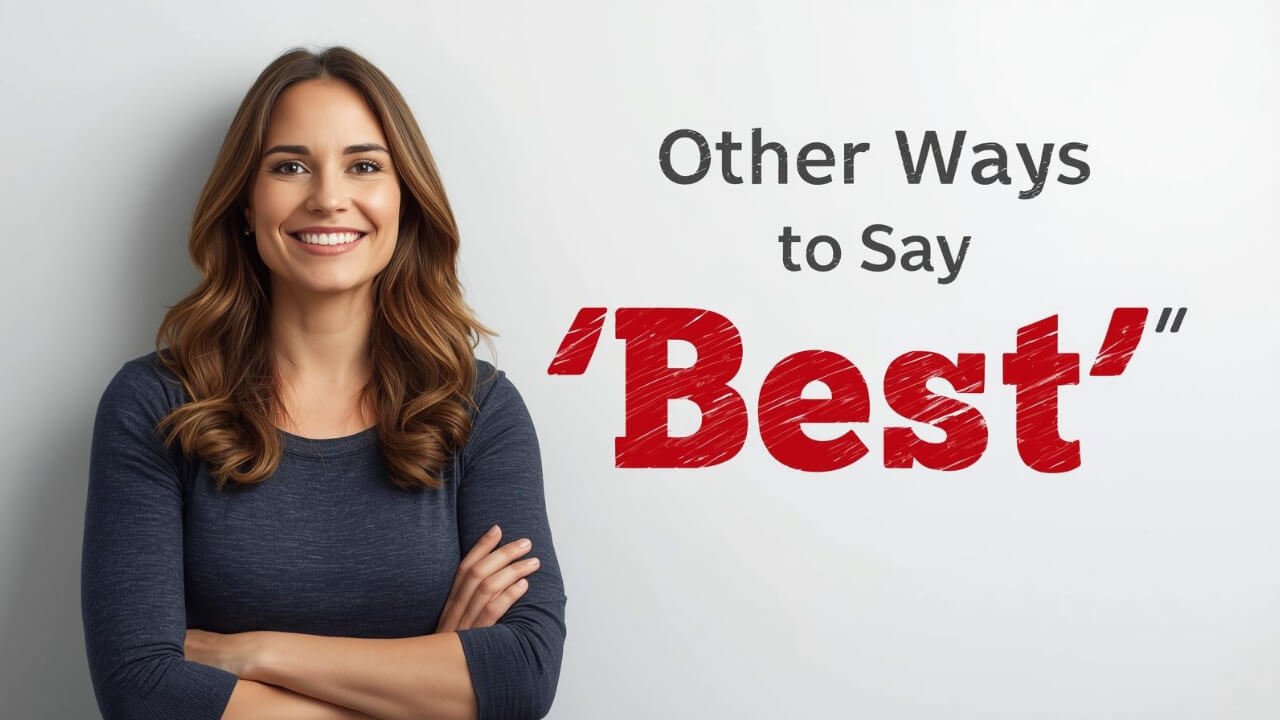

When looking for other ways to say best, it’s important to understand how this word conveys excellence, superiority, or top quality in communication. While “best” is commonly used in casual and formal settings, relying on it repeatedly can make your messages feel repetitive. Exploring alternatives allows you to express praise, admiration, and recognition in more dynamic and engaging ways.
Language shapes relationships, professional reputation, and social interactions. Using varied alternatives to best helps you highlight quality, value, or achievement while keeping your communication fresh and impactful. Whether in personal conversations, academic evaluations, or professional emails, choosing the right phrase ensures your message is memorable and precise.
What Does “Best” Mean?
The word best refers to something that is of the highest quality, most favorable, or superior to all others. It can describe people, ideas, performance, products, or experiences and often implies recognition of excellence or superiority. Using alternative expressions can make your praise or evaluation more specific, thoughtful, and nuanced.
Common Situations Where “Best” Is Used
Best appears in many social, academic, and professional contexts:
- Complimenting someone’s performance, work, or talent
- Highlighting top quality products or services
- Wishing someone well in personal or professional endeavors
- Evaluating options, decisions, or outcomes
- Expressing recognition or appreciation
Is It Professional/Polite to Say “Best”?
Yes, saying best is generally polite and widely accepted. However, in professional or formal writing, alternatives like “outstanding,” “top-notch,” “superior,” or “most favorable” may sound more precise, polished, or sophisticated. Choosing the right synonym ensures your communication reflects attention to tone, clarity, and professionalism.
Pros and Cons
Pros
- Quickly conveys excellence and approval
- Easily understood across languages and cultures
- Useful in both formal and informal communication
Cons
- Can feel generic or overused
- Lacks nuance in specific praise or evaluation
- May not reflect contextual or qualitative details
“Best” Synonyms:

Explore these meaningful alternatives to best:
- Outstanding
- Top-notch
- Excellent
- Superior
- First-rate
- Prime
- Finest
- Exceptional
- Unmatched
- Unrivaled
- Supreme
- Top-tier
- Premier
- Choice
- Elite
- Optimal
- Paramount
- Perfect
- Remarkable
- Distinguished
- Flawless
- Peerless
- Exquisite
- World-class
- Impeccable
- A1
- Top-of-the-line
- Champion
- Ace
- Tip-top
- Magnificent
- Preeminent
- Matchless
- Superseding
- Leading
- Foremost
Outstanding
Meaning: Demonstrates exceptional quality or achievement.
Explanation: Highlights superior performance or top-level excellence in any field.
Example: “Her presentation was outstanding and well-researched.”
Best Use: Professional feedback, academic recognition.
Worst Use: Casual, offhand compliments.
Tone: Formal, highly appreciative
Top-notch
Meaning: High-quality or superior in every way.
Explanation: Commonly used in professional and social contexts to describe products, services, or performance.
Example: “The customer service at this hotel is top-notch.”
Best Use: Product reviews, professional praise.
Worst Use: Overly casual contexts where more formal words are preferred.
Tone: Positive, friendly
Excellent
Meaning: Signifies exceptional quality, skill, or performance.
Explanation: Widely used for praise in professional, academic, and personal settings.
Example: “Your report is excellent and well-documented.”
Best Use: Professional and academic evaluations.
Worst Use: Informal chats where casual alternatives may feel better.
Tone: Polite, affirming
Superior
Meaning: Higher in quality or performance compared to others.
Explanation: Suggests objective excellence or advantage.
Example: “This brand offers superior durability.”
Best Use: Professional, product, or comparative contexts.
Worst Use: Casual compliments without context.
Tone: Formal, evaluative
First-rate
Meaning: Of the highest standard or quality.
Explanation: Often used to describe people, services, or products positively.
Example: “The training program was first-rate and informative.”
Best Use: Workplace or professional praise.
Worst Use: Informal everyday chats.
Tone: Positive, formal
Prime
Meaning: Denotes top quality or most important.
Explanation: Suggests excellence and significance, often in products, services, or positions.
Example: “She is the prime candidate for the leadership role.”
Best Use: Professional evaluations, product reviews.
Worst Use: Casual, informal chats.
Tone: Formal, evaluative
Finest
Meaning: Indicates the highest quality or most excellent.
Explanation: Highlights superior characteristics or performance.
Example: “This is the finest wine available in the region.”
Best Use: Professional, culinary, or product contexts.
Worst Use: Overused in casual compliments.
Tone: Elegant, positive
Exceptional
Meaning: Stands out due to extraordinary quality or performance.
Explanation: Used to emphasize rare excellence or talent.
Example: “Her coding skills are truly exceptional.”
Best Use: Professional praise, academic recognition.
Worst Use: Generic situations without context.
Tone: Strong, impressive
Unmatched
Meaning: Cannot be equaled or rivaled.
Explanation: Highlights unique excellence, often in competitive or comparative contexts.
Example: “The athlete’s endurance is unmatched in the league.”
Best Use: Sports, professional achievements, or product comparisons.
Worst Use: Casual everyday use.
Tone: Strong, assertive
Read Also:
Other Ways to Say “I love You Too”

Unrivaled
Meaning: Superior beyond all competition.
Explanation: Suggests exceptional skill, quality, or performance unmatched by others.
Example: “The restaurant offers an unrivaled dining experience.”
Best Use: Professional, social, or luxury contexts.
Worst Use: Informal chats with minimal significance.
Tone: Formal, impressive
Supreme
Meaning: Highest in rank or quality.
Explanation: Emphasizes dominance, excellence, or leadership.
Example: “The chef prepared a supreme menu for the event.”
Best Use: Luxury products, top-tier services, achievements.
Worst Use: Casual conversations.
Tone: Strong, formal
Top-tier
Meaning: Belongs to the highest level or category.
Explanation: Commonly used to describe elite performance, quality, or status.
Example: “The hotel offers top-tier amenities for its guests.”
Best Use: Professional, luxury, and evaluative contexts.
Worst Use: Everyday casual compliments.
Tone: Professional, descriptive
Premier
Meaning: First in importance or excellence.
Explanation: Suggests leading status or superior quality.
Example: “This is the premier training program for young professionals.”
Best Use: Corporate, academic, or formal settings.
Worst Use: Casual personal praise.
Tone: Formal, authoritative
Choice
Meaning: Represents the best selection or option.
Explanation: Highlights quality, excellence, and careful selection.
Example: “We only offer choice ingredients for our dishes.”
Best Use: Culinary, product quality, or professional contexts.
Worst Use: Overly casual use without significance.
Tone: Formal, evaluative
Elite
Meaning: Top-level, highly skilled, or superior.
Explanation: Often used in teams, products, or services to denote exclusivity.
Example: “The elite group of engineers developed the new software.”
Best Use: Professional, luxury, or competitive contexts.
Worst Use: Casual remarks among friends.
Tone: Strong, prestigious
Optimal
Meaning: Most effective, efficient, or desirable.
Explanation: Focuses on best performance or choice under given conditions.
Example: “We chose the optimal strategy for resource allocation.”
Best Use: Professional, analytical, and academic discussions.
Worst Use: Casual or emotional conversations.
Tone: Formal, precise
Paramount
Meaning: Of highest importance or significance.
Explanation: Emphasizes excellence and priority in professional or critical situations.
Example: “Safety is paramount in chemical engineering operations.”
Best Use: Professional, technical, or critical contexts.
Worst Use: Casual, everyday use.
Tone: Strong, authoritative
Perfect
Meaning: Flawless or without defect.
Explanation: Commonly used to indicate absolute excellence or suitability.
Example: “Her execution of the plan was perfect.”
Best Use: Professional, personal praise, or product reviews.
Worst Use: Overused in informal chats.
Tone: Positive, affirming
Remarkable
Meaning: Worthy of attention due to exceptional quality or achievement.
Explanation: Highlights something extraordinary that stands out.
Example: “He made a remarkable improvement in his skills.”
Best Use: Professional, academic, or personal recognition.
Worst Use: Overused for minor achievements.
Tone: Positive, enthusiastic
Distinguished
Meaning: Recognized for excellence, achievement, or quality.
Explanation: Often used to highlight prestige, reputation, or high status.
Example: “The distinguished professor received numerous awards for research.”
Best Use: Academic, professional, and prestigious contexts.
Worst Use: Casual compliments among peers.
Tone: Formal, respectful
Flawless
Meaning: Without any mistakes or imperfections.
Explanation: Highlights perfect execution or quality, often in professional or creative contexts.
Example: “Her performance in the competition was flawless.”
Best Use: Professional, academic, or artistic recognition.
Worst Use: Overused in casual conversations.
Tone: Strong, affirming
Peerless
Meaning: Without equal; unmatched.
Explanation: Suggests uniqueness and superiority compared to all others.
Example: “His analytical skills are peerless in the department.”
Best Use: Academic, professional, or competitive settings.
Worst Use: Everyday casual use.
Tone: Formal, impressive
Exquisite
Meaning: Extremely beautiful or delicate; excellent in quality.
Explanation: Often used for aesthetic, artistic, or culinary excellence.
Example: “The chef prepared an exquisite dessert for the gala.”
Best Use: Artistic, luxury, or gourmet contexts.
Worst Use: Technical or casual discussions.
Tone: Elegant, refined
World-class
Meaning: Of the highest international standard.
Explanation: Highlights global-level excellence or achievement.
Example: “The engineering team delivered a world-class solution.”
Best Use: Professional, corporate, or competitive recognition.
Worst Use: Casual everyday praise.
Tone: Strong, prestigious
Impeccable
Meaning: Perfectly executed; faultless.
Explanation: Conveys high-quality performance or standards.
Example: “She has impeccable taste in interior design.”
Best Use: Professional, luxury, or formal praise.
Worst Use: Casual chats.
Tone: Elegant, positive
A1
Meaning: Top quality; excellent.
Explanation: Informal, concise way to highlight superior performance or quality.
Example: “His work on the project is A1.”
Best Use: Casual professional or friendly contexts.
Worst Use: Highly formal writing.
Tone: Casual, affirming
Top-of-the-line
Meaning: Represents the best available option.
Explanation: Often used for products, technology, or services.
Example: “They purchased a top-of-the-line laptop for design work.”
Best Use: Product reviews, professional recommendations.
Worst Use: Casual social conversations.
Tone: Professional, descriptive
Champion
Meaning: The best in a field or category.
Explanation: Highlights exceptional achievement or excellence.
Example: “She is a champion in environmental engineering competitions.”
Best Use: Competitive, professional, or personal achievements.
Worst Use: Routine tasks.
Tone: Strong, celebratory
Ace
Meaning: Highly skilled or excellent.
Explanation: Casual, friendly way to acknowledge top-level ability or performance.
Example: “He’s an ace at problem-solving.”
Best Use: Informal professional or friendly praise.
Worst Use: Formal writing.
Tone: Friendly, positive
Tip-top
Meaning: Of the highest quality or condition.
Explanation: Informal expression to describe excellent status or condition.
Example: “Everything is tip-top after the renovation.”
Best Use: Casual, social contexts.
Worst Use: Professional reports.
Tone: Casual, cheerful
Magnificent
Meaning: Grand, splendid, or excellent.
Explanation: Often used for awe-inspiring quality or achievement.
Example: “The conference had a magnificent turnout of professionals.”
Best Use: Public recognition, events, or presentations.
Worst Use: Everyday casual use.
Tone: Formal, enthusiastic
Preeminent
Meaning: Surpassing all others; superior in importance or rank.
Explanation: Highlights leading status, expertise, or achievement.
Example: “She is the preeminent researcher in renewable energy.”
Best Use: Academic, professional, or expert recognition.
Worst Use: Casual social settings.
Tone: Formal, authoritative
Matchless
Meaning: Without an equal; incomparable.
Explanation: Emphasizes unique excellence or distinctiveness.
Example: “His dedication to quality is matchless.”
Best Use: Professional, luxury, or elite recognition.
Worst Use: Routine or casual conversation.
Tone: Strong, formal
Superseding
Meaning: Surpassing or overtaking others in quality or performance.
Explanation: Highlights superiority and progress over previous benchmarks.
Example: “Their technology is superseding all competitors in efficiency.”
Best Use: Professional, technical, or innovation-focused contexts.
Worst Use: Everyday casual use.
Tone: Formal, assertive
Leading
Meaning: At the forefront; best or most advanced.
Explanation: Often used for companies, teams, or individuals excelling in their field.
Example: “They are the leading experts in biotechnology solutions.”
Best Use: Professional, corporate, and technical contexts.
Worst Use: Informal, casual chats.
Tone: Professional, authoritative
Foremost
Meaning: Most prominent, important, or excellent.
Explanation: Highlights primary status or excellence in a particular field.
Example: “She is one of the foremost authorities on sustainable design.”
Best Use: Professional, academic, or leadership recognition.
Worst Use: Casual daily praise.
Tone: Formal, respectful
Conclusion
Expressing excellence and recognizing quality through words like best or its alternatives is crucial for effective communication, professional recognition, and personal praise. Using varied expressions allows you to convey specific qualities, admiration, and acknowledgment more thoughtfully.
By understanding context, tone, and audience, you can select the most appropriate synonym for best, making your communication impactful, authentic, and memorable. Whether in personal messages, academic evaluations, or corporate reviews, these alternatives help you highlight excellence while keeping your language engaging and precise.
FAQs
Can I use informal alternatives like “ace” or “tip-top” professionally?
Informal alternatives are best for casual professional interactions, but formal synonyms like outstanding, superior, or preeminent are preferred in official communications.
What’s the most elegant way to say “best”?
Words like exquisite, impeccable, or distinguished convey elegance and refinement.
Are all synonyms interchangeable?
No, choose based on context, tone, and audience to maintain clarity and appropriateness.
Which alternatives convey strong professional recognition?
Preeminent, leading, top-tier, world-class, and paramount emphasize professional achievement or leadership.
Can these words be used for personal praise?
Yes, words like remarkable, exceptional, champion, or flawless work well for personal or social recognition.