
When looking for other ways to say “not only”, it is important to understand how this phrase helps build emphasis, sentence structure, comparison, and stronger expression. It is commonly used to introduce one idea before adding another related point, often with “but also”. Writers use it in academic writing, professional communication, persuasive sentences, and everyday explanations to make a statement feel more complete.
Clear wording improves logical flow, meaning, and reader understanding. By choosing better alternatives to “not only”, you can avoid repetition and make your writing sound more natural. Some expressions work well in formal essays, while others fit casual conversation or business writing. The best choice depends on your tone, purpose, and the relationship between the ideas.
What Does “Not Only” Mean?
The phrase “not only” means that one thing is true, and another important thing is also true. It is often used to add extra information, strengthen a point, or show that a person, action, quality, or result has more than one important feature.
In grammar, “not only” is often part of the structure “not only but also”. This structure connects two related ideas and gives them balance. It helps writers create emphasis, add detail, and make sentences more powerful.
Common Situations Where “Not Only” Is Used
People use “not only” when they want to add a second idea that supports or strengthens the first one. It appears in essays, speeches, reports, professional writing, and daily communication.
- In academic writing to connect two strong points.
- During presentations to add supporting information.
- In persuasive writing to strengthen an argument.
Is It Professional/Polite to Say “Not Only”?
Yes, “not only” is professional, polite, and widely accepted in formal and informal communication. It works well in essays, reports, business writing, and spoken explanations because it clearly introduces extra value or added meaning.
However, overusing it can make writing feel repetitive. In polished writing, alternatives like “beyond simply”, “more than just”, “in addition to”, or “as well as” can make your sentences smoother and more varied while keeping the meaning clear.
Pros and Cons
Pros
- Adds strong emphasis to a sentence.
- Helps connect two related ideas.
- Improves sentence flow and structure.
Cons
- Can sound repetitive if used too often.
- Often needs “but also” for balance.
- May make sentences longer than necessary.
“Not Only” Synonyms:

Explore these meaningful alternatives to “not only”:
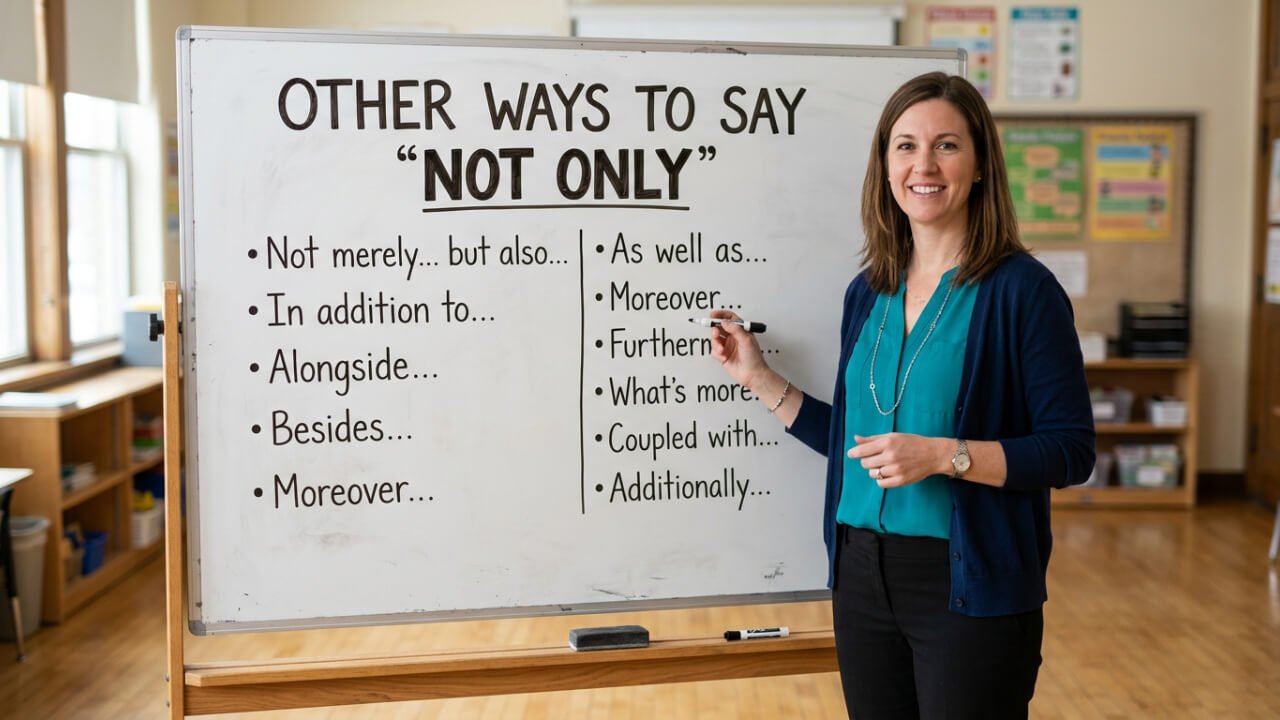
- More Than Just
- Beyond Simply
- Besides Being
- In Addition To
- As Well As
- Along With
- Apart From
- Other Than Merely
- Not Merely
- Not Just
- Over and Above
- Together With
- Coupled With
- Added To
- Including
- Plus
- On Top Of
- Aside From
- In Combination With
- Accompanied By
- Supplemented By
- Extended Beyond
- Going Beyond
- In More Ways Than One
- With the Added Benefit Of
- More Importantly
- What Is More
- To Say Nothing Of
- Further Including
- Not Solely
- Not Exclusively
- As Much As
- Even Beyond
- Together Alongside
- With More Than
More Than Just
Meaning:
Shows that something has greater value than one basic idea.
Explanation:
This phrase is a natural alternative to “not only” when you want to show added meaning, extra quality, or deeper importance.
Example:
“This course is more than just a lesson because it builds confidence and practical skill.”
Best Use:
Descriptions, persuasive writing, and emotional explanations.
Worst Use:
Very formal technical reports.
Tone:
Natural, expressive, clear
Beyond Simply
Meaning:
Means something goes further than a simple action or idea.
Explanation:
This phrase sounds polished and works well when you want to show depth, purpose, or extra value.
Example:
“Beyond simply improving speed, the method also increases accuracy.”
Best Use:
Formal writing, analysis, and professional communication.
Worst Use:
Very casual conversation.
Tone:
Formal, thoughtful, refined
Besides Being
Meaning:
Introduces another quality in addition to the first one.
Explanation:
This phrase is useful when describing a person, place, object, or idea with more than one important feature.
Example:
“Besides being useful, the guide is also easy to understand.”
Best Use:
Descriptions, reviews, and explanatory writing.
Worst Use:
Strict academic arguments that need stronger structure.
Tone:
Clear, natural, descriptive
In Addition To
Meaning:
Means together with something else.
Explanation:
A common formal phrase used to add information in a smooth and organized way.
Example:
“In addition to saving time, the process reduces confusion.”
Best Use:
Reports, essays, instructions, and professional writing.
Worst Use:
Very emotional messages.
Tone:
Formal, clear, organized
As Well As
Meaning:
Means and also.
Explanation:
This phrase connects two related ideas without making the sentence sound too heavy.
Example:
“The plan improves communication as well as teamwork.”
Best Use:
General writing, formal sentences, and everyday explanation.
Worst Use:
Sentences that need strong contrast.
Tone:
Neutral, smooth, flexible
Along With
Meaning:
Means together with another thing.
Explanation:
A simple phrase used to add one idea to another in a natural sentence.
Example:
“Along with better planning, the team needed clearer instructions.”
Best Use:
General writing, conversations, and practical explanations.
Worst Use:
Formal arguments that require emphasis.
Tone:
Neutral, simple, conversational
Apart From
Meaning:
Means besides or in addition to something.
Explanation:
This phrase adds another point while separating it slightly from the first idea.
Example:
“Apart from being affordable, the service is also reliable.”
Best Use:
Comparisons, descriptions, and balanced writing.
Worst Use:
Sentences needing direct cause and effect.
Tone:
Neutral, polished, clear
Other Than Merely
Meaning:
Means beyond only one simple thing.
Explanation:
This phrase gives a formal tone and helps show that something has more importance than it first seems.
Example:
“Other than merely completing the task, she improved the entire process.”
Best Use:
Formal essays, analysis, and careful explanations.
Worst Use:
Daily conversation.
Tone:
Formal, serious, precise
Not Merely
Meaning:
Means not only or not just.
Explanation:
A formal alternative that adds emphasis when introducing another important idea.
Example:
“The goal is not merely to finish quickly but to produce quality work.”
Best Use:
Academic writing, speeches, and professional arguments.
Worst Use:
Casual messages.
Tone:
Formal, emphatic, polished
Read Also:
Other Ways to Say “Join Us”

Not Just
Meaning:
Means more than one thing is true.
Explanation:
This phrase is a simple and natural version of “not only” that works in many contexts.
Example:
“She is not just talented but also hardworking.”
Best Use:
Conversation, general writing, and clear explanations.
Worst Use:
Very formal academic writing.
Tone:
Natural, direct, flexible
Over and Above
Meaning:
Means more than what is expected or already mentioned.
Explanation:
This phrase adds emphasis and suggests extra value, effort, or quality.
Example:
“Over and above his skill, his patience made him a strong leader.”
Best Use:
Formal praise, professional writing, and evaluations.
Worst Use:
Short casual replies.
Tone:
Formal, emphatic, respectful
Together With
Meaning:
Means combined with another thing.
Explanation:
This phrase links two ideas in a balanced and polished way.
Example:
“Together with strong research, clear writing improves the final result.”
Best Use:
Reports, essays, and structured communication.
Worst Use:
Informal speech that needs simpler wording.
Tone:
Formal, balanced, clear
Coupled With
Meaning:
Means combined with something else.
Explanation:
This phrase is often used when two factors work together to create a result.
Example:
“Careful planning coupled with steady effort led to success.”
Best Use:
Analysis, reports, and professional writing.
Worst Use:
Friendly conversation.
Tone:
Formal, analytical, precise
Added To
Meaning:
Means something extra is included with another thing.
Explanation:
A direct phrase that shows another factor increases the value or impact of the first one.
Example:
“Added to his experience, his calm attitude made the decision easier.”
Best Use:
Descriptions, explanations, and practical writing.
Worst Use:
Highly formal academic sentences.
Tone:
Neutral, clear, practical
Including
Meaning:
Means something is part of a larger group or idea.
Explanation:
This phrase is useful when adding examples, features, details, or supporting points.
Example:
“The program teaches several skills, including writing, planning, and communication.”
Best Use:
Lists, explanations, and informational writing.
Worst Use:
Sentences that need emotional emphasis.
Tone:
Clear, factual, simple
Plus
Meaning:
Means and also.
Explanation:
A casual alternative that adds another point in a quick and simple way.
Example:
“The room is quiet, plus it has plenty of natural light.”
Best Use:
Casual conversation, informal writing, and simple explanations.
Worst Use:
Formal essays or professional reports.
Tone:
Casual, direct, simple
On Top Of
Meaning:
Means in addition to something already mentioned.
Explanation:
This phrase adds extra information and often suggests one more benefit, problem, or detail.
Example:
“On top of saving money, the new plan also saves time.”
Best Use:
Conversation, persuasive writing, and practical explanations.
Worst Use:
Strict formal writing.
Tone:
Conversational, clear, expressive
Aside From
Meaning:
Means besides or apart from something.
Explanation:
This phrase introduces another point while keeping the sentence smooth and balanced.
Example:
“Aside from being helpful, the advice was also easy to follow.”
Best Use:
General writing, comparisons, and descriptions.
Worst Use:
Strong arguments that need sharper wording.
Tone:
Neutral, smooth, natural
In Combination With
Meaning:
Means used or considered together with something else.
Explanation:
A formal phrase that works well when two elements jointly create a result.
Example:
“In combination with practice, feedback helps improve performance.”
Best Use:
Technical writing, analysis, reports, and professional explanation.
Worst Use:
Casual daily speech.
Tone:
Formal, analytical, precise
Accompanied By
Meaning:
Means happening or existing together with something else.
Explanation:
This phrase sounds polished and is useful when adding a related quality, result, or condition.
Example:
“The progress was accompanied by stronger confidence.”
Best Use:
Formal descriptions, reports, and academic writing.
Worst Use:
Short casual messages.
Tone:
Formal, descriptive, polished
Supplemented By
Meaning:
Means supported or completed by something additional.
Explanation:
This phrase is useful when one idea is strengthened by another supporting detail.
Example:
“The lesson was supplemented by practical examples.”
Best Use:
Education, reports, professional writing, and analysis.
Worst Use:
Everyday conversation.
Tone:
Formal, informative, precise
Extended Beyond
Meaning:
Means something goes further than one limit or purpose.
Explanation:
This phrase shows that an idea, effect, or value reaches past its basic meaning.
Example:
“The benefit extended beyond comfort and improved overall confidence.”
Best Use:
Formal writing, analysis, and deeper explanation.
Worst Use:
Simple casual statements.
Tone:
Thoughtful, formal, analytical
Going Beyond
Meaning:
Means moving past one basic point or purpose.
Explanation:
This phrase adds energy and shows that something offers more than the expected level.
Example:
“Going beyond basic support, the training builds long term skill.”
Best Use:
Persuasive writing, speeches, and professional content.
Worst Use:
Strict technical sentences.
Tone:
Confident, active, expressive
In More Ways Than One
Meaning:
Means something is true in several ways.
Explanation:
This phrase emphasizes that a point has more than one meaning, effect, or benefit.
Example:
“The decision helped the team in more ways than one.”
Best Use:
Everyday writing, storytelling, and persuasive explanation.
Worst Use:
Detailed technical analysis.
Tone:
Natural, expressive, conversational
With the Added Benefit Of
Meaning:
Means something has an extra positive feature.
Explanation:
This phrase is useful when explaining benefits, improvements, or advantages in a polished way.
Example:
“The plan saves time with the added benefit of reducing stress.”
Best Use:
Professional writing, product descriptions, and persuasive content.
Worst Use:
Short casual replies.
Tone:
Positive, formal, informative
More Importantly
Meaning:
Introduces a stronger or more important added point.
Explanation:
This phrase helps move from one idea to another with greater emphasis.
Example:
“The method is simple. More importantly, it gives accurate results.”
Best Use:
Essays, speeches, arguments, and professional writing.
Worst Use:
When both points have equal importance.
Tone:
Emphatic, formal, clear
What Is More
Meaning:
Means in addition to what has already been said.
Explanation:
A polished phrase used to introduce another important supporting point.
Example:
“The plan is affordable. What is more, it is easy to follow.”
Best Use:
Formal writing, speeches, and persuasive paragraphs.
Worst Use:
Casual conversation.
Tone:
Formal, expressive, persuasive
To Say Nothing Of
Meaning:
Means not even mentioning another important thing.
Explanation:
This phrase adds extra emphasis by suggesting the second point is also worth noticing.
Example:
“The work requires patience, to say nothing of strong attention to detail.”
Best Use:
Formal writing, commentary, and expressive argument.
Worst Use:
Simple instructions or casual replies.
Tone:
Formal, emphatic, refined
Further Including
Meaning:
Means adding more items or details.
Explanation:
This phrase is useful when extending a list or adding another connected point.
Example:
“The report covers several areas, further including cost, time, and quality.”
Best Use:
Reports, formal lists, and informational writing.
Worst Use:
Natural conversation.
Tone:
Formal, factual, structured
Not Solely
Meaning:
Means not only one thing or not limited to one purpose.
Explanation:
This phrase sounds formal and helps show that something has broader meaning.
Example:
“The decision was not solely about cost but also about long term value.”
Best Use:
Academic writing, business communication, and analysis.
Worst Use:
Casual conversation.
Tone:
Formal, precise, analytical
Not Exclusively
Meaning:
Means not limited to one person, group, purpose, or idea.
Explanation:
This phrase is useful when clarifying that something includes more than one area.
Example:
“The rule applies not exclusively to students but also to staff.”
Best Use:
Formal explanations, policies, and careful writing.
Worst Use:
Relaxed everyday speech.
Tone:
Formal, specific, clear
As Much As
Meaning:
Shows equal importance between two ideas.
Explanation:
This phrase can connect two qualities, reasons, or actions with balance and emphasis.
Example:
“The project needs patience as much as skill.”
Best Use:
Balanced comparisons, essays, and thoughtful statements.
Worst Use:
Sentences where the ideas are not equal.
Tone:
Balanced, thoughtful, formal
Even Beyond
Meaning:
Means further than what has already been mentioned.
Explanation:
This phrase adds strong emphasis and shows that an idea reaches a wider level.
Example:
“Even beyond personal success, the achievement encouraged others.”
Best Use:
Speeches, reflective writing, and persuasive explanations.
Worst Use:
Short factual statements.
Tone:
Strong, reflective, expressive
Together Alongside
Meaning:
Means working or existing with something else.
Explanation:
This phrase connects two elements that appear together in one situation.
Example:
“Together alongside effort, patience helped create a better result.”
Best Use:
Descriptive writing and general explanations.
Worst Use:
Highly formal grammar focused writing.
Tone:
Neutral, connected, descriptive
With More Than
Meaning:
Means having more qualities, effects, or parts than one.
Explanation:
This phrase helps show that something includes added value beyond a single point.
Example:
“With more than talent, she showed discipline and steady focus.”
Best Use:
Descriptions, personal praise, and explanatory writing.
Worst Use:
Strict formal reports.
Tone:
Natural, expressive, clear
Conclusion
Using alternatives to “not only” improves sentence variety, clarity, and logical connection. The right phrase can help you add information, strengthen an argument, and show that an idea has more than one important side. This makes your writing smoother, richer, and easier to follow.
Choosing the best expression depends on context, tone, and sentence purpose. Formal options like “in addition to” work well in essays and reports, while natural phrases like “not just” fit everyday communication. With better wording, your sentences can sound more balanced, polished, and meaningful.
FAQs
What is another way to say “not only”?
You can say “more than just”, “in addition to”, “as well as”, or “beyond simply.” These phrases help add extra meaning or connect related ideas.
Is “not only” formal?
Yes, “not only” is suitable for formal and informal writing. It is especially common in essays, reports, speeches, and professional communication.
Can I use “not only” without “but also”?
Yes, you can sometimes use “not only” without “but also”, but the sentence often sounds more complete when both parts are included.
What is a formal alternative to “not only”?
A formal alternative is “in addition to.” You can also use “not merely”, “not solely”, or “beyond simply” in polished writing.
What is a simple alternative to “not only”?
A simple alternative is “not just.” It works well in everyday conversation, simple explanations, and natural writing.