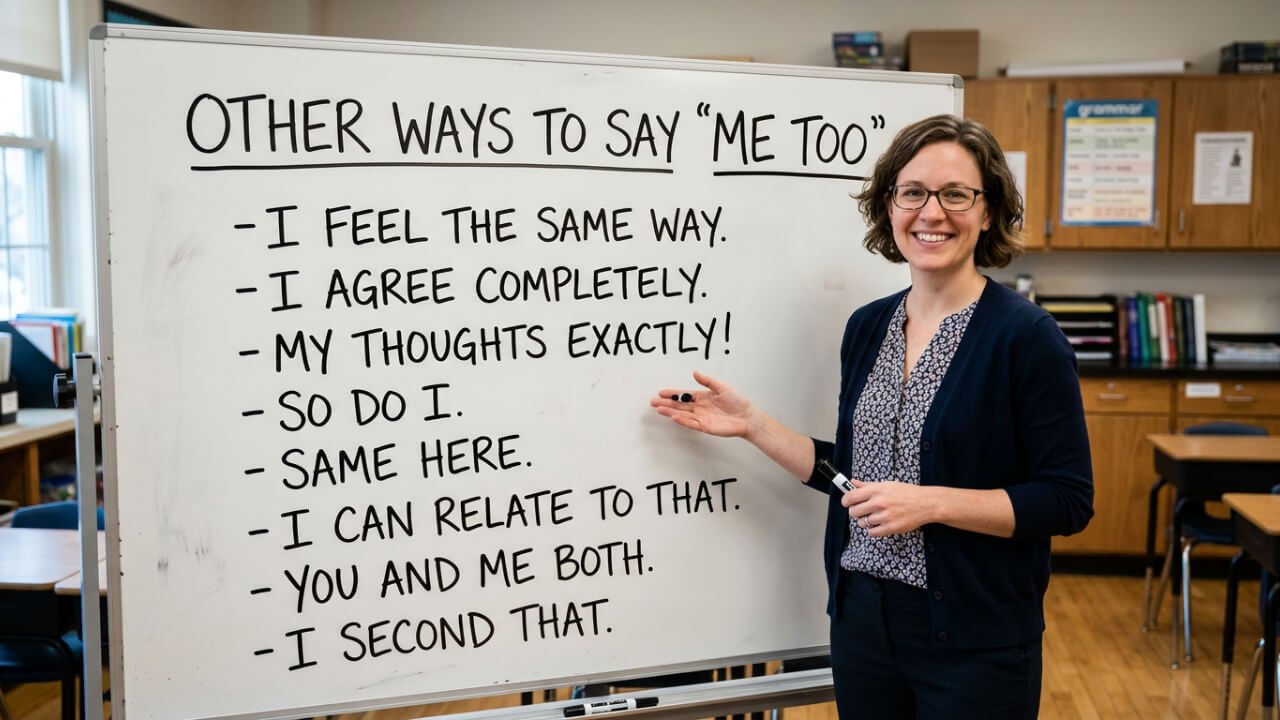

When looking for other ways to say “me too”, it is useful to understand how this short phrase works in conversation, agreement, shared feelings, and daily communication. People use it when they want to say they have the same opinion, experience, emotion, preference, or reaction as someone else. Although it is simple and natural, repeating it too often can make your language sound limited.
Better wording can make your response feel more expressive, polite, friendly, or professional depending on the situation. In spoken English, personal messages, workplace discussions, and emotional conversations, choosing the right alternative helps you show connection, understanding, and agreement with more clarity.
What Does “Me Too” Mean?
The phrase “me too” means I feel the same, I have the same experience, or I agree with what you said. It is commonly used when someone wants to show that their thought, feeling, action, or situation matches another person’s statement.
In communication, “me too” works as a short response that creates connection. It can show shared interest, mutual emotion, common experience, or simple agreement without needing a long explanation.
Common Situations Where “Me Too” Is Used
People use “me too” when they want to respond quickly and show that they share the same feeling, opinion, habit, or experience. It appears often in friendly talks, family conversations, professional settings, and casual replies.
- When agreeing with someone’s opinion.
- During friendly conversations about shared interests.
- When responding to emotional feelings.
Is It Professional/Polite to Say “Me Too”?
Yes, “me too” is polite in casual and friendly communication. It is short, clear, and easy to understand. In relaxed conversations, it sounds natural and warm because it shows shared feelings or agreement without sounding forced.
However, in professional communication, formal writing, or serious discussions, it may sound too casual. Alternatives like “I agree as well”, “I share the same view”, or “I feel the same way” can sound more polished and suitable.
Pros and Cons
Pros
- Shows quick agreement and connection.
- Sounds natural in everyday conversation.
- Helps express shared feelings simply.
Cons
- Can sound too casual in formal settings.
- May feel repetitive if used often.
- Does not always explain the exact feeling.
“Me Too” Synonyms:

Explore these meaningful alternatives to “me too”:
- Same Here
- I Feel the Same Way
- I Do Too
- So Do I
- Me As Well
- I Agree
- I Share That Feeling
- I’m With You
- That Goes for Me Too
- I Think So Too
- I Have the Same Experience
- I Can Relate
- I Understand That Feeling
- I’m in the Same Boat
- I Feel That Too
- I See It the Same Way
- I’m Right There With You
- Same for Me
- I Also Feel That Way
- I Have That in Common
- I Agree As Well
- I’m of the Same Mind
- I Share Your View
- I Feel Likewise
- Likewise
- I Can Say the Same
- That Applies to Me Too
- I’m Thinking the Same Thing
- I Know What You Mean
- I Feel Similar
- Count Me In
- I’m Along the Same Lines
- That Matches My Thoughts
- I Have the Same Thought
- You’re Not Alone in That
Same Here
Meaning:
Shows that you feel or think the same thing.
Explanation:
A simple and natural alternative used in casual conversation when your feeling, opinion, or experience matches someone else’s.
Example:
“She said she loves quiet mornings, and I replied, ‘Same here.’”
Best Use:
Friendly chats, casual replies, and everyday agreement.
Worst Use:
Formal writing or serious professional statements.
Tone:
Casual, friendly, natural
I Feel the Same Way
Meaning:
Shows shared emotion, opinion, or reaction.
Explanation:
This phrase sounds thoughtful and clear, especially when responding to someone’s feelings, concerns, or personal view.
Example:
“I feel the same way about needing more time to decide.”
Best Use:
Emotional conversations, personal messages, and polite agreement.
Worst Use:
Very quick casual replies.
Tone:
Warm, sincere, clear
I Do Too
Meaning:
Means you also do the same thing or feel the same way.
Explanation:
A short and direct phrase used when agreeing with a statement that includes an action, habit, or preference.
Example:
“She enjoys reading before bed, and I do too.”
Best Use:
Simple conversations, preferences, and daily habits.
Worst Use:
Formal documents or detailed explanations.
Tone:
Simple, casual, direct
So Do I
Meaning:
Means you share the same action, feeling, or opinion.
Explanation:
This phrase is grammatically useful when replying to positive statements about actions or preferences.
Example:
“He likes peaceful places, and so do I.”
Best Use:
Clear replies, spoken English, and sentence variety.
Worst Use:
When the previous sentence does not match the structure.
Tone:
Natural, correct, conversational
Me As Well
Meaning:
Means the same thing applies to you.
Explanation:
A slightly more polished version of “me too” that can sound polite in both casual and semi formal settings.
Example:
“She wanted to join the discussion, and me as well.”
Best Use:
Polite replies, shared choices, and group conversations.
Worst Use:
Very formal writing that needs complete sentence structure.
Tone:
Polite, neutral, simple
I Agree
Meaning:
Shows that you support the same idea or opinion.
Explanation:
This phrase focuses on agreement rather than shared experience, making it useful in discussions and decisions.
Example:
“I agree that the plan needs more time.”
Best Use:
Opinions, meetings, discussions, and debates.
Worst Use:
Emotional situations where shared feeling matters more.
Tone:
Clear, direct, respectful
I Share That Feeling
Meaning:
Means you have the same emotion as someone else.
Explanation:
A thoughtful phrase that works well when responding to personal feelings with care and understanding.
Example:
“I share that feeling after such a long week.”
Best Use:
Emotional support, personal messages, and serious conversations.
Worst Use:
Quick everyday replies.
Tone:
Caring, reflective, sincere
I’m With You
Meaning:
Shows agreement, support, or shared understanding.
Explanation:
This phrase can mean you agree with someone’s thought or stand beside them emotionally.
Example:
“I’m with you on choosing a simpler solution.”
Best Use:
Friendly agreement, support, and shared opinions.
Worst Use:
Formal reports or academic writing.
Tone:
Supportive, conversational, warm
That Goes for Me Too
Meaning:
Means the same statement also applies to you.
Explanation:
This phrase is useful when someone describes a feeling, preference, or situation that matches your own.
Example:
“She said she needed rest, and that goes for me too.”
Best Use:
Shared experiences, friendly replies, and casual writing.
Worst Use:
Very formal communication.
Tone:
Natural, casual, clear
I Think So Too
Meaning:
Shows that you share the same opinion.
Explanation:
This phrase is useful when agreeing with someone’s belief, idea, or judgment in a softer way.
Example:
“I think so too because the timing feels right.”
Best Use:
Opinions, suggestions, and polite discussion.
Worst Use:
Statements about personal actions.
Tone:
Polite, thoughtful, conversational
I Have the Same Experience
Meaning:
Means you went through something similar.
Explanation:
This phrase is more specific than “me too” because it focuses on shared experience rather than simple agreement.
Example:
“I have the same experience with learning something new slowly.”
Best Use:
Personal stories, support, and meaningful conversations.
Worst Use:
Short casual replies.
Tone:
Clear, personal, explanatory
Read Also:
Other Ways to Say “First of All”

I Can Relate
Meaning:
Means you understand because you have felt or experienced something similar.
Explanation:
A common phrase used to show empathy, emotional understanding, or shared life experience.
Example:
“I can relate to feeling nervous before a big change.”
Best Use:
Supportive conversations, personal stories, and empathy.
Worst Use:
Formal writing or official communication.
Tone:
Empathetic, casual, warm
I Understand That Feeling
Meaning:
Shows emotional understanding and shared feeling.
Explanation:
This phrase is gentle and useful when someone shares sadness, stress, joy, fear, or personal concern.
Example:
“I understand that feeling when everything becomes overwhelming.”
Best Use:
Comforting replies, emotional support, and personal talks.
Worst Use:
Light casual agreement.
Tone:
Kind, gentle, supportive
I’m in the Same Boat
Meaning:
Means you are in the same situation.
Explanation:
A conversational phrase used when two people are facing the same problem, challenge, or condition.
Example:
“I’m in the same boat with trying to finish everything on time.”
Best Use:
Shared problems, casual support, and relatable situations.
Worst Use:
Formal academic writing.
Tone:
Casual, relatable, friendly
I Feel That Too
Meaning:
Means you also feel the same emotion.
Explanation:
This phrase is direct and emotional, making it useful when someone shares a feeling you also understand.
Example:
“I feel that too when plans suddenly change.”
Best Use:
Personal messages, emotional talks, and friendly replies.
Worst Use:
Formal business communication.
Tone:
Emotional, casual, sincere
I See It the Same Way
Meaning:
Shows that your opinion or understanding matches someone else’s.
Explanation:
A clear phrase used when agreeing with someone’s viewpoint, decision, or interpretation.
Example:
“I see it the same way after hearing all the details.”
Best Use:
Discussions, opinions, decisions, and respectful agreement.
Worst Use:
Simple emotional responses.
Tone:
Thoughtful, respectful, clear
I’m Right There With You
Meaning:
Shows strong agreement or emotional support.
Explanation:
This phrase feels warm and supportive, especially when someone shares a feeling, struggle, or concern.
Example:
“I’m right there with you on needing a quiet break.”
Best Use:
Supportive conversations, shared feelings, and friendly agreement.
Worst Use:
Formal essays or reports.
Tone:
Warm, expressive, supportive
Same for Me
Meaning:
Means the same thing is true for you.
Explanation:
A short and clear phrase that works well when responding to preferences, experiences, or situations.
Example:
“She prefers working in silence, and same for me.”
Best Use:
Casual replies, simple agreement, and shared preferences.
Worst Use:
Formal communication.
Tone:
Simple, casual, neutral
I Also Feel That Way
Meaning:
Shows that your emotion or opinion is the same.
Explanation:
This phrase sounds complete and natural when you want to show agreement with a personal feeling.
Example:
“I also feel that way about starting something new.”
Best Use:
Personal opinions, emotional replies, and thoughtful discussion.
Worst Use:
Very quick casual replies.
Tone:
Sincere, clear, respectful
I Have That in Common
Meaning:
Means you share the same quality, interest, or experience.
Explanation:
This phrase works well when connecting over a shared habit, value, preference, or background.
Example:
“I have that in common with you because I enjoy quiet evenings too.”
Best Use:
Building connection, introductions, and friendly conversations.
Worst Use:
Formal analysis or technical writing.
Tone:
Friendly, personal, warm
I Agree As Well
Meaning:
Means you also support the same opinion.
Explanation:
A polite phrase that sounds more professional than “me too” when joining a discussion.
Example:
“I agree as well that the message should be clearer.”
Best Use:
Workplace discussion, polite replies, and group opinions.
Worst Use:
Very emotional personal messages.
Tone:
Professional, polite, balanced
I’m of the Same Mind
Meaning:
Means you have the same opinion or belief.
Explanation:
A more formal expression used when your thinking matches another person’s view.
Example:
“I’m of the same mind about keeping the process simple.”
Best Use:
Formal discussions, thoughtful writing, and serious opinions.
Worst Use:
Casual daily conversation.
Tone:
Formal, mature, thoughtful
I Share Your View
Meaning:
Shows that you agree with someone’s perspective.
Explanation:
This phrase is respectful and useful when responding to opinions, arguments, or viewpoints.
Example:
“I share your view that clear communication matters.”
Best Use:
Professional writing, meetings, and polite disagreement or agreement.
Worst Use:
Friendly chats that need relaxed wording.
Tone:
Respectful, formal, clear
I Feel Likewise
Meaning:
Means you feel the same way.
Explanation:
This phrase sounds polished and slightly formal while still showing shared emotion or opinion.
Example:
“I feel likewise about the importance of patience.”
Best Use:
Formal replies, thoughtful messages, and respectful agreement.
Worst Use:
Very casual conversation.
Tone:
Polished, formal, sincere
Likewise
Meaning:
Means in the same way or the same for me.
Explanation:
A concise alternative that works well when responding politely to shared feelings or actions.
Example:
“She wished him well, and he replied, ‘Likewise.’”
Best Use:
Polite replies, formal conversation, and short responses.
Worst Use:
Deep emotional situations that need fuller wording.
Tone:
Brief, polite, neutral
I Can Say the Same
Meaning:
Means your experience or opinion matches someone else’s.
Explanation:
This phrase is useful when you want to confirm that the same statement applies to you.
Example:
“He said the lesson was useful, and I can say the same.”
Best Use:
Reviews, discussions, shared opinions, and personal experience.
Worst Use:
Quick casual reactions.
Tone:
Clear, neutral, conversational
That Applies to Me Too
Meaning:
Means the same statement is true for you.
Explanation:
A clear and specific phrase used when someone’s point, rule, feeling, or situation includes you as well.
Example:
“She said mornings are difficult, and that applies to me too.”
Best Use:
Explanations, shared situations, and polite responses.
Worst Use:
Very casual short replies.
Tone:
Clear, practical, neutral
I’m Thinking the Same Thing
Meaning:
Shows that your thought matches another person’s thought.
Explanation:
This phrase works well when two people reach the same idea or reaction at the same time.
Example:
“I’m thinking the same thing about changing the plan.”
Best Use:
Decisions, ideas, suggestions, and casual discussion.
Worst Use:
Formal writing.
Tone:
Conversational, natural, friendly
I Know What You Mean
Meaning:
Shows understanding and shared experience.
Explanation:
A common phrase used when someone’s feeling or idea makes sense because you understand it personally.
Example:
“I know what you mean about needing more time to think.”
Best Use:
Empathy, casual conversation, and personal support.
Worst Use:
Formal reports or academic essays.
Tone:
Understanding, warm, casual
I Feel Similar
Meaning:
Means your feeling is close to the other person’s feeling.
Explanation:
This phrase is useful when you agree partly or have a similar emotional response.
Example:
“I feel similar about the situation, though my reason is a little different.”
Best Use:
Careful agreement, emotional discussion, and honest responses.
Worst Use:
Strong agreement that needs clearer wording.
Tone:
Measured, thoughtful, honest
Count Me In
Meaning:
Means you also want to be included.
Explanation:
This phrase is used when “me too” means joining an activity, plan, or group decision.
Example:
“If everyone is going for a walk, count me in.”
Best Use:
Plans, invitations, group activities, and friendly replies.
Worst Use:
Emotional agreement or formal writing.
Tone:
Energetic, casual, willing
I’m Along the Same Lines
Meaning:
Means your thinking is similar.
Explanation:
This phrase is useful when your idea follows a similar direction without being exactly the same.
Example:
“I’m along the same lines, but I would add one more point.”
Best Use:
Discussions, planning, brainstorming, and opinions.
Worst Use:
Simple emotional replies.
Tone:
Thoughtful, conversational, flexible
That Matches My Thoughts
Meaning:
Shows that someone’s idea agrees with your own thinking.
Explanation:
This phrase is useful when another person expresses the same opinion you already had.
Example:
“That matches my thoughts about making the process easier.”
Best Use:
Meetings, opinions, planning, and written replies.
Worst Use:
Light casual conversation.
Tone:
Clear, professional, reflective
I Have the Same Thought
Meaning:
Means your idea is the same as another person’s idea.
Explanation:
A direct phrase that works well when agreeing with a suggestion, decision, or observation.
Example:
“I have the same thought about starting earlier.”
Best Use:
Polite discussion, planning, and shared ideas.
Worst Use:
Emotional comfort or casual excitement.
Tone:
Neutral, clear, polite
You’re Not Alone in That
Meaning:
Shows that you share the same feeling or experience.
Explanation:
This phrase is supportive because it tells someone their feeling, struggle, or opinion is shared.
Example:
“You’re not alone in that because I feel the same pressure too.”
Best Use:
Emotional support, reassurance, and personal conversations.
Worst Use:
Formal writing or simple agreement.
Tone:
Comforting, supportive, sincere
Conclusion
Using alternatives to “me too” helps improve sentence variety, emotional expression, and clear communication. The right phrase can show agreement, empathy, shared experience, or support in a way that matches the moment. Some alternatives sound casual and friendly, while others feel more thoughtful or professional.
Choosing better wording depends on context, relationship, and tone. Phrases like “same here” work well in relaxed conversation, while “I share your view” fits more formal discussion. With the right expression, your response can sound natural, respectful, and meaningful.
FAQs
What is another way to say “me too”?
You can say “same here”, “I feel the same way”, “so do I”, or “I can relate.” These phrases express agreement or shared experience naturally.
Is “me too” polite?
Yes, “me too” is polite in casual conversation. In formal settings, a phrase like “I agree as well” or “I share your view” sounds more professional.
Can I use “me too” in professional communication?
You can use it in relaxed workplace conversation, but it may sound too casual in formal writing. Use “I agree as well” or “I share the same view” for a polished tone.
What is a formal alternative to “me too”?
A formal alternative is “I share your view.” You can also use “I’m of the same mind” or “I agree as well” in professional discussions.
What is a friendly way to say “me too”?
A friendly way to say “me too” is “same here”, “I can relate”, or “I’m right there with you.” These phrases sound warm and natural.