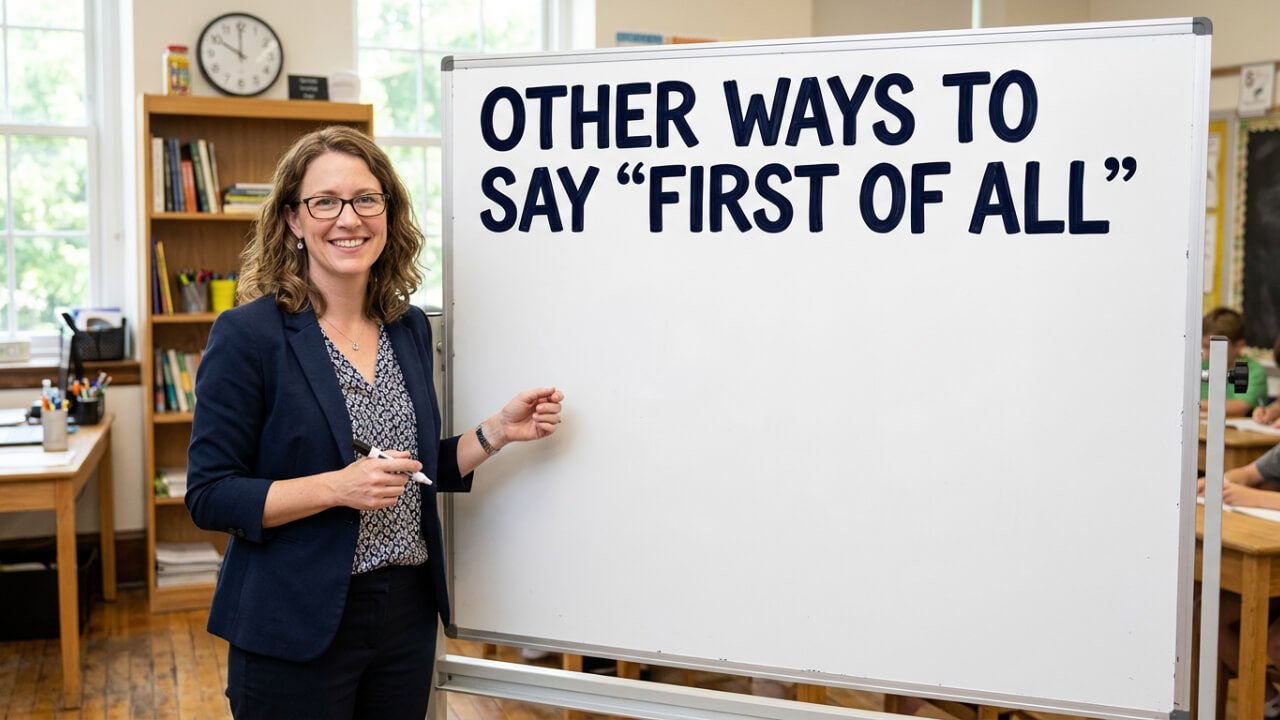

When looking for other ways to say “first of all”, it is important to understand how this phrase helps organize ideas, arguments, explanations, and written communication. It is commonly used to introduce the first point in a sequence, begin a discussion, or guide readers through a clear structure. However, repeating the same phrase can make your writing sound basic or less polished.
Strong transition words, clear sentence structure, and natural logical flow make communication easier to follow. By choosing the right alternative to “first of all”, you can improve your academic writing, professional tone, presentation style, and everyday expression. The best phrase depends on whether your message is formal, casual, persuasive, instructional, or conversational.
What Does “First of All” Mean?
The phrase “first of all” means before anything else, as the first point, or to begin with. It is used to introduce the first idea in a list, explanation, argument, speech, or written response.
In communication and writing, this phrase works as a transition phrase that creates order. It tells the reader or listener that the speaker is starting with the most immediate point before moving to other details.
Common Situations Where “First of All” Is Used
People use “first of all” when they want to begin with a clear point, explain something step by step, or organize information in a logical order. It appears in essays, speeches, instructions, opinions, and professional communication.
- In essays to introduce the first argument.
- During presentations to begin a topic.
- In professional messages to organize ideas.
Is It Professional/Polite to Say “First of All”?
Yes, “first of all” is polite and acceptable in many types of formal communication, academic writing, and everyday speech. It is clear, direct, and easy to understand, which makes it useful when you need to begin a point naturally.
However, it can sound slightly blunt in disagreement or too simple in advanced writing. More polished alternatives like “to begin with”, “at the outset”, “as a starting point”, or “first and foremost” can make your message sound more refined.
Pros and Cons
Pros
- Helps organize ideas in a clear order.
- Makes explanations easier to follow.
- Works well in both speech and writing.
Cons
- Can sound repetitive if used often.
- May feel too basic in formal writing.
- Can sound blunt during disagreement.
“First of All” Synonyms:
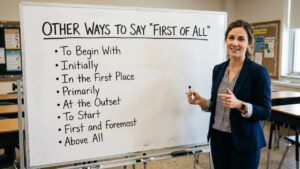
Explore these meaningful alternatives to “first of all”:
- To Begin With
- First
- Firstly
- Before Anything Else
- To Start With
- At the Outset
- As a Starting Point
- For Starters
- In the First Place
- To Open With
- At the Beginning
- Let Me Begin By Saying
- My First Point Is
- The First Thing to Note Is
- It Should Be Noted First
- Before We Go Further
- To Set the Stage
- As an Opening Point
- From the Beginning
- Initially
- In the Beginning
- To Introduce the Topic
- Opening With This
- Prior to Anything Else
- Before All Else
- To Start the Discussion
- As the First Matter
- The First Consideration Is
- To Lead With
- Kicking Things Off
- To Begin the Discussion
- Starting With This
- First and Foremost
- As the First Step
- At the Start
To Begin With
Meaning:
Introduces the first idea, reason, or point clearly.
Explanation:
A polished alternative that works well in formal writing, essays, and structured explanations.
Example:
“To begin with, we need to understand the main purpose of this decision.”
Best Use:
Essays, reports, speeches, and professional communication.
Worst Use:
Very casual conversations.
Tone:
Formal, clear, structured
First
Meaning:
Shows the first point in a sequence.
Explanation:
A simple and direct word used to organize steps, arguments, or instructions without extra wording.
Example:
“First, check the main details before making a decision.”
Best Use:
Instructions, lists, and clear explanations.
Worst Use:
Emotional writing that needs a softer opening.
Tone:
Simple, direct, neutral
Firstly
Meaning:
Introduces the first item in a list or argument.
Explanation:
A common transition word used in structured writing when more points will follow.
Example:
“Firstly, the plan needs stronger organization.”
Best Use:
Essays, academic writing, and formal paragraphs.
Worst Use:
Relaxed conversation.
Tone:
Formal, organized, academic
Before Anything Else
Meaning:
Shows that one idea should come first.
Explanation:
This phrase gives importance to the first point before moving into other details.
Example:
“Before anything else, we should focus on safety.”
Best Use:
Important instructions, advice, and serious discussions.
Worst Use:
Short lists that need quick wording.
Tone:
Serious, clear, thoughtful
To Start With
Meaning:
Introduces the beginning of an explanation.
Explanation:
A natural phrase that works well in both conversation and general writing.
Example:
“To start with, this idea needs a clear purpose.”
Best Use:
Everyday speech, explanations, and simple essays.
Worst Use:
Highly formal reports.
Tone:
Neutral, conversational, flexible
At the Outset
Meaning:
Means at the very beginning.
Explanation:
A formal phrase often used in professional writing, analysis, and serious discussion.
Example:
“At the outset, we must define the main objective.”
Best Use:
Reports, speeches, and academic writing.
Worst Use:
Casual conversation.
Tone:
Formal, precise, professional
As a Starting Point
Meaning:
Introduces the first idea in a discussion.
Explanation:
This phrase works well when the first point becomes the base for further explanation.
Example:
“As a starting point, we should review the main problem.”
Best Use:
Planning, analysis, meetings, and essays.
Worst Use:
Fast informal replies.
Tone:
Thoughtful, organized, professional
For Starters
Meaning:
Introduces the first reason in a casual way.
Explanation:
A friendly phrase often used when giving opinions, advice, or simple explanations.
Example:
“For starters, the design needs more clarity.”
Best Use:
Casual conversation, advice, and light explanations.
Worst Use:
Formal academic writing.
Tone:
Casual, friendly, direct
Read Also:
Other Ways to Say “Pretty”

In the First Place
Meaning:
Introduces the original reason or first point.
Explanation:
This phrase is often used when explaining why something began or why something matters.
Example:
“In the first place, the rule was created to protect everyone.”
Best Use:
Arguments, explanations, and reasoning.
Worst Use:
Soft emotional messages.
Tone:
Logical, firm, explanatory
To Open With
Meaning:
Means to begin with a certain point.
Explanation:
This phrase is useful when starting a speech, paragraph, presentation, or discussion.
Example:
“To open with, let us consider the main issue.”
Best Use:
Speeches, introductions, and formal discussions.
Worst Use:
Daily casual talk.
Tone:
Formal, introductory, polished
At the Beginning
Meaning:
Refers to the first stage or opening part.
Explanation:
A clear phrase used when discussing the start of a process, story, or explanation.
Example:
“At the beginning, the instructions seemed difficult.”
Best Use:
Storytelling, process writing, and explanations.
Worst Use:
Formal arguments needing stronger transitions.
Tone:
Neutral, clear, descriptive
Let Me Begin By Saying
Meaning:
Introduces the speaker’s first statement.
Explanation:
This phrase creates a smooth opening in speeches, presentations, and thoughtful responses.
Example:
“Let me begin by saying that your effort is appreciated.”
Best Use:
Speeches, formal replies, and personal messages.
Worst Use:
Short direct instructions.
Tone:
Polite, expressive, respectful
My First Point Is
Meaning:
Clearly introduces the first argument or idea.
Explanation:
A direct phrase that helps readers follow structured reasoning and organized discussion.
Example:
“My first point is that the current system needs improvement.”
Best Use:
Debates, essays, presentations, and reports.
Worst Use:
Creative writing.
Tone:
Clear, logical, formal
The First Thing to Note Is
Meaning:
Highlights the first important detail.
Explanation:
This phrase is useful when introducing a key observation or important fact.
Example:
“The first thing to note is that the results changed quickly.”
Best Use:
Analysis, reports, and explanations.
Worst Use:
Very casual comments.
Tone:
Informative, formal, precise
It Should Be Noted First
Meaning:
Shows that one detail must be mentioned first.
Explanation:
A formal phrase used when the opening point needs special attention.
Example:
“It should be noted first that the schedule has changed.”
Best Use:
Professional writing, formal notices, and analysis.
Worst Use:
Friendly conversation.
Tone:
Formal, serious, objective
Before We Go Further
Meaning:
Introduces something important before continuing.
Explanation:
This phrase helps pause the discussion and bring attention to an important first point.
Example:
“Before we go further, we should clarify the main goal.”
Best Use:
Meetings, explanations, and discussions.
Worst Use:
Short written lists.
Tone:
Practical, clear, conversational
To Set the Stage
Meaning:
Introduces background before the main discussion.
Explanation:
This phrase prepares the reader or listener for the ideas that follow.
Example:
“To set the stage, we need to understand the earlier decision.”
Best Use:
Presentations, storytelling, and detailed explanations.
Worst Use:
Simple step by step instructions.
Tone:
Descriptive, polished, explanatory
As an Opening Point
Meaning:
Introduces the first point in an organized way.
Explanation:
A formal phrase that helps create structure in written or spoken communication.
Example:
“As an opening point, the report needs clearer data.”
Best Use:
Formal writing, presentations, and analysis.
Worst Use:
Casual everyday speech.
Tone:
Formal, structured, thoughtful
From the Beginning
Meaning:
Means starting from the first stage.
Explanation:
This phrase works well when discussing how something started or should be understood.
Example:
“From the beginning, the plan required careful attention.”
Best Use:
Narratives, explanations, and process descriptions.
Worst Use:
Formal lists of arguments.
Tone:
Descriptive, clear, natural
Initially
Meaning:
Means at first or in the beginning.
Explanation:
A concise word often used in academic writing, reports, and analytical explanations.
Example:
“Initially, the results appeared unclear.”
Best Use:
Reports, analysis, essays, and formal writing.
Worst Use:
Very emotional messages.
Tone:
Formal, concise, analytical
In the Beginning
Meaning:
Refers to the earliest part of something.
Explanation:
This phrase is useful when describing the first stage of a story, process, or event.
Example:
“In the beginning, the project faced several challenges.”
Best Use:
Storytelling, explanations, and process writing.
Worst Use:
Strict academic arguments.
Tone:
Narrative, clear, simple
To Introduce the Topic
Meaning:
Signals the beginning of a subject.
Explanation:
This phrase is useful when opening an explanation, lesson, article, or discussion.
Example:
“To introduce the topic, we should define the main term.”
Best Use:
Teaching, writing, speeches, and presentations.
Worst Use:
Casual conversation.
Tone:
Instructional, formal, clear
Opening With This
Meaning:
Begins with a specific idea or point.
Explanation:
A flexible phrase that introduces the first thought in a clear and natural way.
Example:
“Opening with this, the speaker explained the purpose of the meeting.”
Best Use:
Writing, speeches, and discussion summaries.
Worst Use:
Highly formal academic writing.
Tone:
Neutral, descriptive, conversational
Prior to Anything Else
Meaning:
Means before all other points or actions.
Explanation:
This phrase gives priority to the first idea and sounds more formal than casual alternatives.
Example:
“Prior to anything else, the requirements must be reviewed.”
Best Use:
Formal instructions, planning, and professional writing.
Worst Use:
Relaxed daily speech.
Tone:
Formal, careful, precise
Before All Else
Meaning:
Shows that one thing matters first.
Explanation:
This phrase adds emphasis when the first point is more important than the rest.
Example:
“Before all else, honesty should guide the decision.”
Best Use:
Advice, values, serious writing, and speeches.
Worst Use:
Technical lists.
Tone:
Strong, thoughtful, serious
To Start the Discussion
Meaning:
Begins a conversation or organized exchange of ideas.
Explanation:
This phrase is useful when opening a meeting, article section, or thoughtful response.
Example:
“To start the discussion, we should focus on the main concern.”
Best Use:
Meetings, essays, group talks, and presentations.
Worst Use:
Short casual comments.
Tone:
Professional, organized, clear
As the First Matter
Meaning:
Introduces the first issue to address.
Explanation:
A formal phrase used when discussing topics in order of importance.
Example:
“As the first matter, the team reviewed the budget.”
Best Use:
Formal meetings, reports, and official discussions.
Worst Use:
Everyday conversation.
Tone:
Formal, serious, structured
The First Consideration Is
Meaning:
Introduces the first important factor.
Explanation:
This phrase works well in analysis, planning, and decision making.
Example:
“The first consideration is whether the plan is realistic.”
Best Use:
Reports, evaluations, essays, and professional planning.
Worst Use:
Casual storytelling.
Tone:
Analytical, formal, thoughtful
To Lead With
Meaning:
Means to begin by presenting a certain idea.
Explanation:
This phrase is often used when choosing the first point in communication or writing.
Example:
“To lead with, the message should focus on clarity.”
Best Use:
Presentations, writing strategy, and discussions.
Worst Use:
Very formal academic documents.
Tone:
Practical, modern, direct
Kicking Things Off
Meaning:
Means starting something in an energetic way.
Explanation:
A casual phrase used to begin an activity, discussion, or explanation with energy.
Example:
“Kicking things off, we reviewed the main goal.”
Best Use:
Casual talks, friendly meetings, and informal presentations.
Worst Use:
Formal writing and academic essays.
Tone:
Casual, lively, friendly
To Begin the Discussion
Meaning:
Introduces the start of a conversation or explanation.
Explanation:
This phrase works well when starting a serious or organized topic.
Example:
“To begin the discussion, we should examine the first issue.”
Best Use:
Meetings, essays, presentations, and analysis.
Worst Use:
Very casual replies.
Tone:
Formal, clear, organized
Starting With This
Meaning:
Introduces the first point in a simple way.
Explanation:
A natural phrase used to begin a statement, explanation, or list.
Example:
“Starting with this, the instructions become easier to understand.”
Best Use:
General writing, explanations, and tutorials.
Worst Use:
Highly formal reports.
Tone:
Neutral, simple, useful
First and Foremost
Meaning:
Means most importantly before anything else.
Explanation:
This phrase adds emphasis and shows that the first point has special importance.
Example:
“First and foremost, we must protect the quality of the work.”
Best Use:
Speeches, advice, serious writing, and strong opinions.
Worst Use:
Light casual conversation.
Tone:
Emphatic, formal, strong
As the First Step
Meaning:
Shows the first action in a process.
Explanation:
This phrase is useful when explaining procedures, plans, or instructions.
Example:
“As the first step, review the instructions carefully.”
Best Use:
Guides, processes, planning, and instructional writing.
Worst Use:
Opinion based essays.
Tone:
Practical, clear, instructional
At the Start
Meaning:
Means at the beginning of something.
Explanation:
A simple phrase used to describe the opening stage of an event, process, or explanation.
Example:
“At the start, the project needed better direction.”
Best Use:
General writing, storytelling, and simple explanations.
Worst Use:
Formal academic arguments.
Tone:
Simple, clear, neutral
Conclusion
Using alternatives to “first of all” improves writing clarity, sentence variety, and logical organization. The right phrase helps you introduce ideas smoothly, whether you are writing an essay, giving a presentation, explaining instructions, or sharing an opinion. Strong transitions make your message easier to follow.
Choosing the best expression depends on context, tone, and purpose. Formal phrases like “at the outset” work well in professional writing, while casual options like “for starters” fit friendly conversation. With better wording, your communication becomes more polished, natural, and effective.
FAQs
What is another way to say “first of all”?
You can say “to begin with”, “firstly”, “as a starting point”, or “first and foremost.” These phrases help introduce the first idea clearly.
Is “first of all” formal?
Yes, “first of all” can be used in formal writing, but phrases like “at the outset” or “to begin with” may sound more polished.
Can I use “first of all” in an essay?
Yes, you can use “first of all” in an essay, especially when introducing your first argument. For stronger style, you may also use “firstly” or “to begin with.”
What is a casual alternative to “first of all”?
A casual alternative is “for starters.” It sounds natural in everyday conversation, friendly advice, and informal explanations.
How do I choose the best alternative to “first of all”?
Choose based on tone, context, and sentence purpose. Use formal phrases for academic or professional writing and simpler phrases for casual communication.