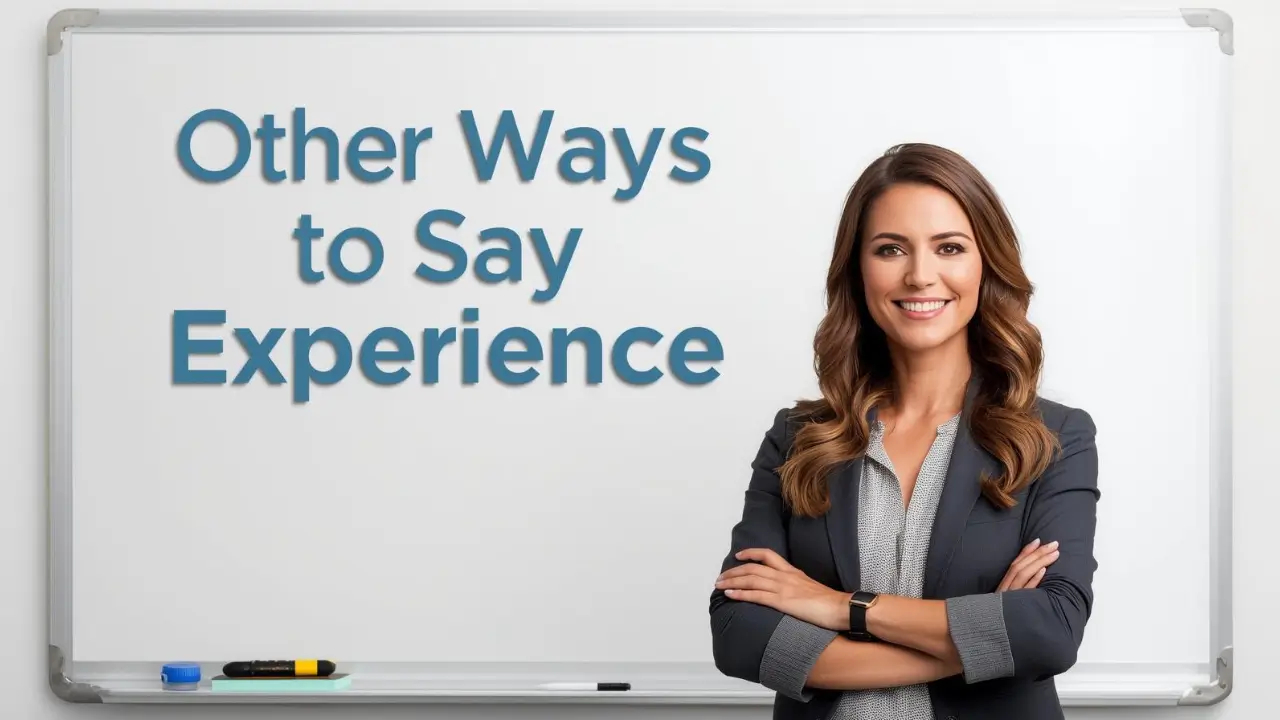

Choosing the right words can make your communication more clear, engaging, and impactful. Sometimes, using the same term repeatedly can feel repetitive or limiting, especially in writing or professional conversations. That’s why many people look for other ways to say experience to express ideas with more variety and precision.
Whether you’re describing skills, life events, or personal growth, using alternative words can help you sound more polished and expressive. From formal vocabulary to casual expressions, the right synonym can enhance your message and better match your tone. In this article, you’ll explore useful alternatives to expand your vocabulary effectively.
Other Ways to Say “Experience” (Direct synonyms)
Direct synonyms of experience allow writers to convey the same meaning without repeating the word, maintaining clarity and precision. These words are ideal in general contexts and everyday writing.
- Knowledge – She has deep knowledge in chemical engineering.
- Expertise – His expertise in project management is unmatched.
- Skill – She gained skill in laboratory analysis.
- Proficiency – He shows proficiency in software applications.
- Background – Her background in education supports this study.
- Competence – He demonstrated competence in handling machinery.
- Mastery – She has mastery of distillation processes.
- Familiarity – He has familiarity with plant operations.
- Insight – She shared valuable insight into wastewater treatment.
- Practice – Regular practice improved his analytical skills.
- Know-how – He has practical know-how in chemical synthesis.
- Acumen – Her business acumen guided the project successfully.
- Exposure – His exposure to industrial processes is extensive.
- Understanding – She has a clear understanding of thermodynamics.
- Wisdom – He applied his wisdom to solve complex problems.
Action Oriented Alternatives to “Experience”
These alternatives emphasize active engagement or participation, making your sentences more dynamic, suitable for resumes, reports, or narratives.
- Undertake – He undertook multiple safety audits last year.
- Engage in – She engaged in hands-on laboratory research.
- Participate in – He participated in the ammonia plant project.
- Perform – She performed experiments with precision.
- Execute – He executed process optimization tasks effectively.
- Handle – She handled quality control operations.
- Practice – He practiced industrial equipment maintenance daily.
- Conduct – She conducted absorption studies in the lab.
- Operate – He operated chemical reactors safely.
- Apply – She applied theoretical knowledge in practice.
- Implement – He implemented safety protocols in the plant.
- Carry out – She carried out analytical tests for wastewater.
- Administer – He administered chemical experiments systematically.
- Manage – She managed the lab team efficiently.
- Engross in – He engrossed himself in process simulation exercises.
Read Also:
Other Ways to Say “No Problem”
Professional & Career Related Phrases for “Experience”
These phrases work well in resumes, LinkedIn profiles, and professional contexts, highlighting achievements and competencies.
- Career history – His career history includes plant operation roles.
- Work record – She has a strong work record in project management.
- Professional journey – His professional journey spans five years in chemical industry.
- Industry exposure – She gained industry exposure through internship projects.
- Vocational practice – He refined his skills through vocational practice.
- Professional background – Her professional background supports process optimization.
- Job tenure – His job tenure includes roles in ammonia production.
- Role experience – She has role experience as a process engineer.
- Occupational expertise – His occupational expertise is in chemical synthesis.
- Employment history – She listed her employment history on her CV.
- Position held – His previous positions held provide strong leadership exposure.
- Professional skillset – Her professional skillset includes analytical and technical abilities.
- Industry tenure – He has ten years of industry tenure in plant operations.
- Job experience – She has extensive job experience in wastewater treatment.
- Professional exposure – He had professional exposure to large-scale distillation operations.
Educational & Skills Focused Expressions for “Experience”
These alternatives emphasize learning, academic achievements, and skill acquisition, suitable for CVs, reports, or student portfolios.
- Training – He completed training in chemical process safety.
- Apprenticeship – She finished an apprenticeship at Engro’s FrieslandCampina plant.
- Internship – He gained experience through a six-week internship.
- Scholarly exposure – She had scholarly exposure to biochemical engineering projects.
- Coursework – His coursework included process optimization.
- Laboratory practice – She developed practical skills through laboratory practice.
- Skill acquisition – He focused on skill acquisition in instrumentation.
- Practical learning – She applied practical learning in FYP research.
- Hands-on training – He received hands-on training in ammonia plant operations.
- Capstone project – She demonstrated competence in her capstone project.
- Classroom experience – He gained classroom experience in thermodynamics.
- Project work – She engaged in project work for wastewater analysis.
- Fieldwork – He completed fieldwork at industrial chemical plants.
- Experiential learning – She benefited from experiential learning during internships.
- Academic practice – He honed his skills through academic practice and simulations.
Personal and Life “Experience” Alternatives
These alternatives capture life lessons, personal growth, and informal experiences, often used in storytelling, blogs, or reflections.
- Life lessons – Traveling taught her important life lessons.
- Encounters – His encounters with different cultures broadened his perspective.
- Moments – Life-changing moments shaped her character.
- Adventures – He had adventures in remote industrial sites.
- Journey – Her journey through internships shaped her career goals.
- Experiences lived – He shared experiences lived during his FYP.
- Personal growth – Traveling contributed to his personal growth.
- Learning curve – She navigated a steep learning curve during research.
- Trials – Overcoming trials strengthened his problem-solving skills.
- Challenges faced – She reflected on challenges faced in lab work.
- Encounters with life – Encounters with life outside the classroom taught him resilience.
- Milestones – Graduating marked one of her key milestones.
- Episodes – He documented episodes from his internship journey.
- Practical exposure – Life provided practical exposure to teamwork.
- Experiential moments – Experiential moments influenced her career choices.
Emotional or Perceptual Alternatives for “Experience”
These alternatives capture feelings, sensations, and emotional understanding, ideal for reflective writing, personal essays, or storytelling. They convey how an event was perceived or felt rather than just observed.
- Feeling – She had a feeling of accomplishment after the project.
- Sensation – He experienced a sensation of awe during the experiment.
- Impression – The lecture left a lasting impression on her.
- Perception – His perception of safety changed after plant training.
- Emotion – She recalled the emotion of completing her FYP.
- Awareness – He gained awareness of industrial hazards.
- Response – Her response to challenges improved her confidence.
- Intuition – He trusted his intuition while troubleshooting machinery.
- Insight – She gained insight into team dynamics.
- Reflection – He engaged in reflection after his internship.
- Appreciation – She developed an appreciation for chemical processes.
- Recognition – He received recognition for handling a crisis.
- Observation – Her observation skills improved during lab sessions.
- Cognition – He enhanced his cognition of process engineering.
- Sentiment – The sentiment of success motivated her further.
Creative and Narrative Expressions for “Experience”
These alternatives are useful in stories, blogs, and creative writing, making descriptions more engaging and vivid. They often emphasize the narrative aspect of events.
- Adventure – Her internship was an adventure in real-world chemistry.
- Saga – His saga in plant operations was inspiring.
- Journey – She documented her journey through biochemical experiments.
- Chronicle – He wrote a chronicle of his FYP milestones.
- Story – Her story about industrial training was captivating.
- Episode – Each episode in the lab taught new lessons.
- Odyssey – His odyssey through chemical engineering shaped his skills.
- Quest – She embarked on a quest to master process optimization.
- Tale – He shared a tale of overcoming experimental errors.
- Narrative – Her narrative highlighted challenges in wastewater treatment.
- Experience arc – The experience arc of her internship was transformative.
- Memoir – He kept a memoir of professional growth.
- Account – She wrote an account of her laboratory trials.
- Adventure story – His adventure story included working in ammonia production.
- Voyage – Her voyage through educational projects broadened her knowledge.
Adjective Phrases & Descriptive Alternatives
Using adjectives or descriptive phrases adds detail and color, emphasizing the quality or type of experience. Ideal for resumes, storytelling, and analytical writing.
- Hands-on – He gained hands-on experience in plant operations.
- First-hand – She had first-hand knowledge of process safety.
- Practical – Practical experience enhanced his chemical engineering skills.
- Direct – Direct exposure to distillation columns improved her confidence.
- Personal – His personal involvement strengthened understanding.
- Immersive – The immersive internship taught teamwork and safety.
- Intensive – She underwent intensive laboratory training.
- Observational – Observational experience improved his analytical skills.
- Applied – Applied learning during the FYP was invaluable.
- Experimental – Experimental work enhanced practical skills.
- Real-world – Real-world tasks strengthened problem-solving abilities.
- On-the-job – On-the-job training prepared him for industrial challenges.
- Practical-field – Practical-field exposure increased her industrial familiarity.
- Technical – Technical experience developed expertise in instrumentation.
- Comprehensive – Comprehensive involvement built strong foundational knowledge.
Business & Professional Context Alternatives
Perfect for corporate, industrial, or workplace writing, emphasizing skills, achievements, and work involvement.
- Professional exposure – Professional exposure developed managerial skills.
- Corporate experience – Corporate experience included project supervision.
- Industry tenure – Industry tenure helped him gain credibility.
- Work involvement – Work involvement strengthened teamwork skills.
- Job history – Job history demonstrates reliability.
- Role execution – Role execution refined problem-solving abilities.
- Career practice – Career practice enhanced technical expertise.
- Professional engagement – Professional engagement improved networking skills.
- Occupational exposure – Occupational exposure increased familiarity with processes.
- On-the-job learning – On-the-job learning contributed to skill development.
- Employment background – Employment background includes lab and plant work.
- Task completion – Task completion shows efficiency.
- Project participation – Project participation honed leadership skills.
- Workplace involvement – Workplace involvement improved operational knowledge.
- Professional mastery – Professional mastery reflects accumulated expertise.
Common Phrases & Idioms Related to “Experience”
These alternatives include idiomatic or common phrases, adding naturalness and flair to writing.
- Learn the ropes – She quickly learned the ropes in lab operations.
- Hands-on experience – Hands-on experience improved her technical skills.
- Get the hang of – He got the hang of process control.
- Trial and error – Trial and error helped him improve.
- On the job – She learned on the job during her internship.
- Cut your teeth – He cut his teeth in the chemical industry.
- Gain ground – She gained ground in instrumentation expertise.
- Bread and butter – Safety protocols are the bread and butter of plant work.
- Learn by doing – He learned by doing laboratory experiments.
- Go through the motions – She went through the motions before mastering the process.
- Test the waters – He tested the waters in process optimization.
- Get a feel for – She got a feel for industrial equipment handling.
- Make headway – He made headway in analytical skills.
- Step into the shoes – She stepped into the shoes of a senior engineer.
- Walk the path – He walked the path of experiential learning.
Conclusion
Understanding and using multiple alternatives for “experience” enhances clarity, precision, and engagement in writing. From professional and academic contexts to personal, emotional, and creative expressions, these alternatives help you communicate more effectively. Selecting context-appropriate terms ensures your message is both accurate and compelling, avoiding repetition while enriching your language. By applying these synonyms, phrases, and idiomatic expressions, you can convey nuances of knowledge, exposure, skill, and personal growth, making your writing versatile, professional, and reader-friendly.
FAQs
Why should I use alternatives for “experience”?
Using alternatives prevents repetition, improves clarity, and allows for precise expression in different contexts, making writing more engaging.
Can these alternatives be used in resumes?
Yes, professional, career-related, and educational alternatives are ideal for resumes, CVs, and LinkedIn profiles.
Are idioms like “learn the ropes” formal?
Idioms are informal but suitable for storytelling, blogs, and casual writing, not formal reports.
Do emotional alternatives suit academic writing?
Emotional alternatives are best for reflective essays or narratives; academic writing prefers formal synonyms like knowledge, exposure, or study.
How many types of alternatives are covered in this guide?
This guide covers over 18 categories, including synonyms, action-oriented, professional, emotional, creative, contextual, and idiomatic alternatives.