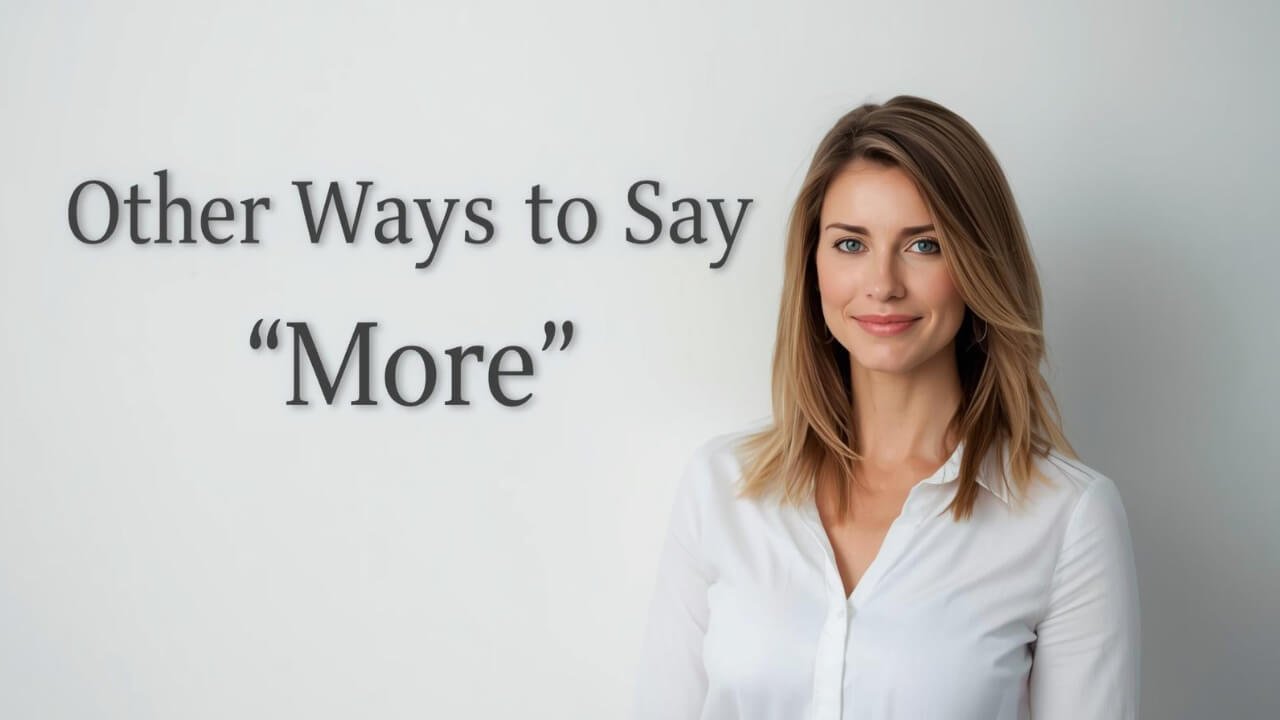

When looking for other ways to say “more”, it’s important to understand how this simple word plays a powerful role in comparison, emphasis, and quantity expression. It is commonly used in everyday communication, academic writing, and professional conversations. However, repeating “more” can make your language feel basic or repetitive. Using alternatives helps you sound more precise, engaging, and expressive.
Language is essential for clear communication, vocabulary development, and effective expression. By choosing better alternatives for “more,” you can enhance your writing style, improve clarity, and make your message more impactful. The right word choice allows you to match the tone, context, and purpose of your communication.
What Does “More” Mean?
The word “more” refers to a greater amount, degree, or quantity of something. It is often used to compare, emphasize, or request an increase in something.
Common Situations Where “More” Is Used
The word appears in many contexts depending on intent and tone.
- Comparing two things
- Asking for additional quantity
- Emphasizing intensity or degree
- Expanding ideas in writing
- Encouraging improvement or growth
Is It Professional/Polite to Say “More”?
Yes, “more” is completely acceptable in both formal and informal communication. However, using alternatives like “additional,” “further,” or “greater” can make your communication sound more professional, polished, and varied, especially in academic or workplace settings.
Pros and Cons
Pros
- Simple and easy to understand
- Works in almost all contexts
- Widely accepted in communication
Cons
- Can sound repetitive
- Lacks variety and depth
- May feel too basic in formal writing
“More” Synonyms:

Explore these meaningful alternatives:
- Additional
- Further
- Extra
- Greater
- Increased
- Added
- Supplementary
- Expanded
- Enhanced
- Augmented
- Plus
- On Top Of That
- As Well
- Also
- Moreover
- Furthermore
- Besides
- In Addition
- Over and Above
- Excess
- Higher
- Elevated
- Boosted
- Amplified
- More Than Before
- To a Greater Extent
- In Larger Amounts
- Even More
- A Bit More
- Far More
- Much More
- Considerably More
- Significantly More
- An Increase In
- Greater Quantity
Additional
Meaning:
Something extra added.
Explanation:
Used to refer to something extra beyond what is already present.
Example:
“We need additional information.”
Best Use:
Professional and academic writing.
Worst Use:
Very casual speech.
Tone:
Formal
Further
Meaning:
Beyond or more.
Explanation:
Often used to indicate continuation or extension.
Example:
“For further details, contact us.”
Best Use:
Formal writing.
Worst Use:
Casual repetition.
Tone:
Professional
Extra
Meaning:
Something more than required.
Explanation:
A common word for additional quantity.
Example:
“Can I have extra sauce?”
Best Use:
Casual communication.
Worst Use:
Formal documents.
Tone:
Informal
Greater
Meaning:
Larger in amount or degree.
Explanation:
Used in comparisons to show increase or importance.
Example:
“This requires greater effort.”
Best Use:
Formal and academic contexts.
Worst Use:
Casual talk.
Tone:
Formal
Increased
Meaning:
Made larger in amount.
Explanation:
Indicates growth or rise.
Example:
“There is increased demand.”
Best Use:
Reports and analysis.
Worst Use:
Casual speech.
Tone:
Formal
Extra
Meaning:
Additional amount.
Explanation:
Used in daily conversations for simple additions.
Example:
“I need extra time.”
Best Use:
Casual contexts.
Worst Use:
Formal writing.
Tone:
Informal
Added
Meaning:
Something included additionally.
Explanation:
Shows something included on top of existing items.
Example:
“This feature adds value.”
Best Use:
General communication.
Worst Use:
Repetitive use.
Tone:
Neutral
Supplementary
Meaning:
Extra support or addition.
Explanation:
Used for supporting or additional materials.
Example:
“Supplementary notes are provided.”
Best Use:
Academic writing.
Worst Use:
Casual use.
Tone:
Formal
Expanded
Meaning:
Made larger or broader.
Explanation:
Refers to growth or extension.
Example:
“The program was expanded.”
Best Use:
Professional contexts.
Worst Use:
Casual speech.
Tone:
Neutral
Enhanced
Meaning:
Improved or increased.
Explanation:
Used when something becomes better or stronger.
Example:
“The system was enhanced.”
Best Use:
Professional writing.
Worst Use:
Casual use.
Tone:
Formal
Read Also:
Other Ways to Say “Growing Up”

Augmented
Meaning:
Increased or made greater.
Explanation:
A formal word for adding or boosting something.
Example:
“The team was augmented.”
Best Use:
Technical writing.
Worst Use:
Casual conversations.
Tone:
Formal
Plus
Meaning:
In addition to.
Explanation:
A simple and casual way to add extra information.
Example:
“It’s affordable, plus effective.”
Best Use:
Casual speech.
Worst Use:
Formal writing.
Tone:
Informal
Also
Meaning:
In addition.
Explanation:
Used to add another point or idea.
Example:
“He is smart and also hardworking.”
Best Use:
General communication.
Worst Use:
Overuse.
Tone:
Neutral
Moreover
Meaning:
Adds emphasis.
Explanation:
Used in formal writing to introduce additional strong points.
Example:
“Moreover, the results improved.”
Best Use:
Formal writing.
Worst Use:
Casual talk.
Tone:
Formal
Furthermore
Meaning:
Adds more information.
Explanation:
A formal connector for additional ideas.
Example:
“Furthermore, this method is effective.”
Best Use:
Academic writing.
Worst Use:
Casual speech.
Tone:
Formal
On Top Of That
Meaning:
Adds extra information.
Explanation:
Used to include another point in addition to what has already been said.
Example:
“He is talented, and on top of that, very hardworking.”
Best Use:
Casual and semi-formal communication.
Worst Use:
Highly formal writing.
Tone:
Conversational
As Well
Meaning:
Also or in addition.
Explanation:
A simple phrase used to add extra information smoothly.
Example:
“She is coming as well.”
Best Use:
Everyday communication.
Worst Use:
Overuse in formal writing.
Tone:
Neutral
Besides
Meaning:
In addition to.
Explanation:
Used to introduce another supporting point.
Example:
“Besides, we already agreed.”
Best Use:
General writing.
Worst Use:
Formal academic writing.
Tone:
Neutral
In Addition
Meaning:
Adds extra detail.
Explanation:
A formal phrase used to expand on ideas.
Example:
“In addition, we improved efficiency.”
Best Use:
Professional and academic writing.
Worst Use:
Casual speech.
Tone:
Formal
Over and Above
Meaning:
Beyond what is expected.
Explanation:
Used to emphasize something extra or beyond limits.
Example:
“He contributed over and above expectations.”
Best Use:
Formal and professional contexts.
Worst Use:
Casual conversation.
Tone:
Formal
Excess
Meaning:
More than needed.
Explanation:
Refers to an amount beyond what is required.
Example:
“The excess was removed.”
Best Use:
Technical and formal writing.
Worst Use:
Casual talk.
Tone:
Formal
Higher
Meaning:
Greater in level or amount.
Explanation:
Used in comparisons to show increase.
Example:
“This requires a higher level of skill.”
Best Use:
General and professional use.
Worst Use:
None significant.
Tone:
Neutral
Elevated
Meaning:
Raised to a higher level.
Explanation:
Often used in formal contexts to show increase or improvement.
Example:
“The risk level is elevated.”
Best Use:
Professional or technical writing.
Worst Use:
Casual speech.
Tone:
Formal
Boosted
Meaning:
Increased quickly.
Explanation:
Used to describe a sudden or positive increase.
Example:
“Sales were boosted this month.”
Best Use:
Business and casual use.
Worst Use:
Highly formal writing.
Tone:
Semi-formal
Amplified
Meaning:
Increased in strength or effect.
Explanation:
Used to show intensified impact or volume.
Example:
“The message was amplified.”
Best Use:
Formal and creative writing.
Worst Use:
Casual speech.
Tone:
Formal
More Than Before
Meaning:
Greater than earlier.
Explanation:
Highlights increase compared to past.
Example:
“I study more than before.”
Best Use:
General communication.
Worst Use:
Formal writing.
Tone:
Neutral
To a Greater Extent
Meaning:
To a higher degree.
Explanation:
A formal way to express increase in intensity.
Example:
“This affects people to a greater extent.”
Best Use:
Academic writing.
Worst Use:
Casual talk.
Tone:
Formal
In Larger Amounts
Meaning:
In bigger quantity.
Explanation:
Used to describe increase in volume or number.
Example:
“The product is needed in larger amounts.”
Best Use:
General and technical writing.
Worst Use:
Very casual speech.
Tone:
Neutral
Even More
Meaning:
Additional beyond expected.
Explanation:
Emphasizes extra increase.
Example:
“This makes it even more interesting.”
Best Use:
General communication.
Worst Use:
Overuse.
Tone:
Emphasizing
A Bit More
Meaning:
Slight increase.
Explanation:
Used for small additional amount.
Example:
“I need a bit more time.”
Best Use:
Casual conversation.
Worst Use:
Formal writing.
Tone:
Informal
Far More
Meaning:
Much greater amount.
Explanation:
Used to show strong comparison.
Example:
“This is far more effective.”
Best Use:
General and professional use.
Worst Use:
None significant.
Tone:
Emphatic
Much More
Meaning:
Significantly greater.
Explanation:
Emphasizes large increase.
Example:
“This requires much more effort.”
Best Use:
General use.
Worst Use:
Repetition.
Tone:
Neutral
Considerably More
Meaning:
Noticeably greater.
Explanation:
Shows clear and significant increase.
Example:
“This costs considerably more.”
Best Use:
Formal and analytical writing.
Worst Use:
Casual talk.
Tone:
Formal
Significantly More
Meaning:
Much greater in importance or amount.
Explanation:
Used in data-driven or analytical contexts.
Example:
“This method is significantly more efficient.”
Best Use:
Professional and academic writing.
Worst Use:
Casual conversation.
Tone:
Formal
An Increase In
Meaning:
Rise in amount.
Explanation:
Used to describe growth or upward change.
Example:
“There is an increase in demand.”
Best Use:
Reports and formal writing.
Worst Use:
Casual talk.
Tone:
Formal
Greater Quantity
Meaning:
Larger amount.
Explanation:
A formal phrase to describe more in number or volume.
Example:
“We need a greater quantity of materials.”
Best Use:
Technical and professional contexts.
Worst Use:
Casual speech.
Tone:
Formal
Conclusion
Using alternatives to “more” helps improve your communication by adding variety, clarity, and precision. Instead of relying on a single word, you can choose expressions that better match your tone, context, and purpose, making your message more engaging and professional.
By expanding your vocabulary, you enhance your ability to express ideas clearly and effectively. Thoughtful word choice strengthens communication, improves writing quality, and ensures your message is both impactful and easy to understand.
FAQs
Is “more” too basic to use?
No, but overusing it can make your writing repetitive.
What is the best formal alternative?
“Additional,” “further,” or “greater.”
Can I use casual alternatives?
Yes, depending on context.
Why use synonyms for “more”?
To improve clarity and avoid repetition.
How do I choose the right one?
Consider tone, audience, and purpose.